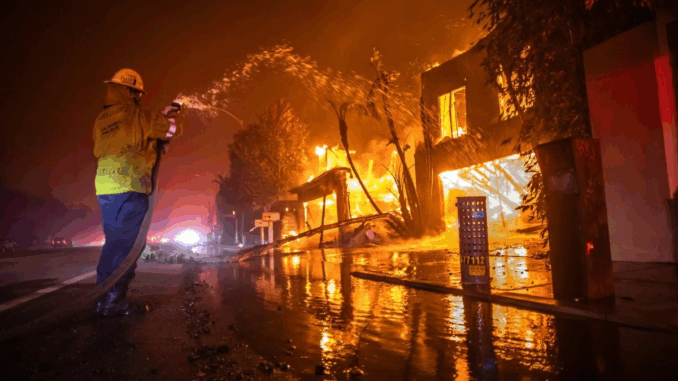
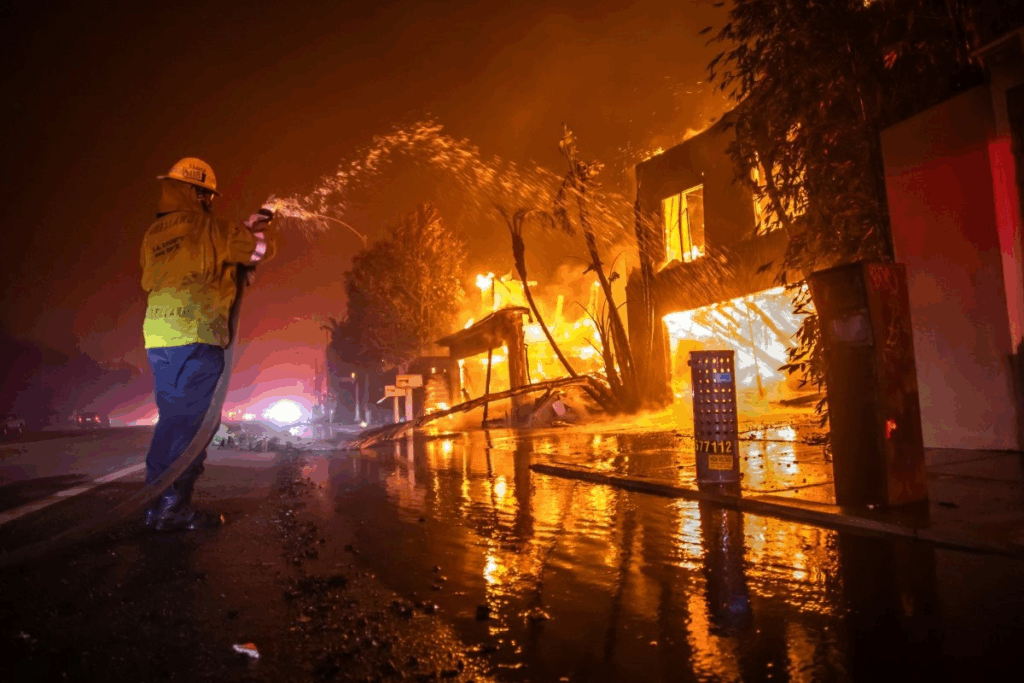
Overview of the Incident
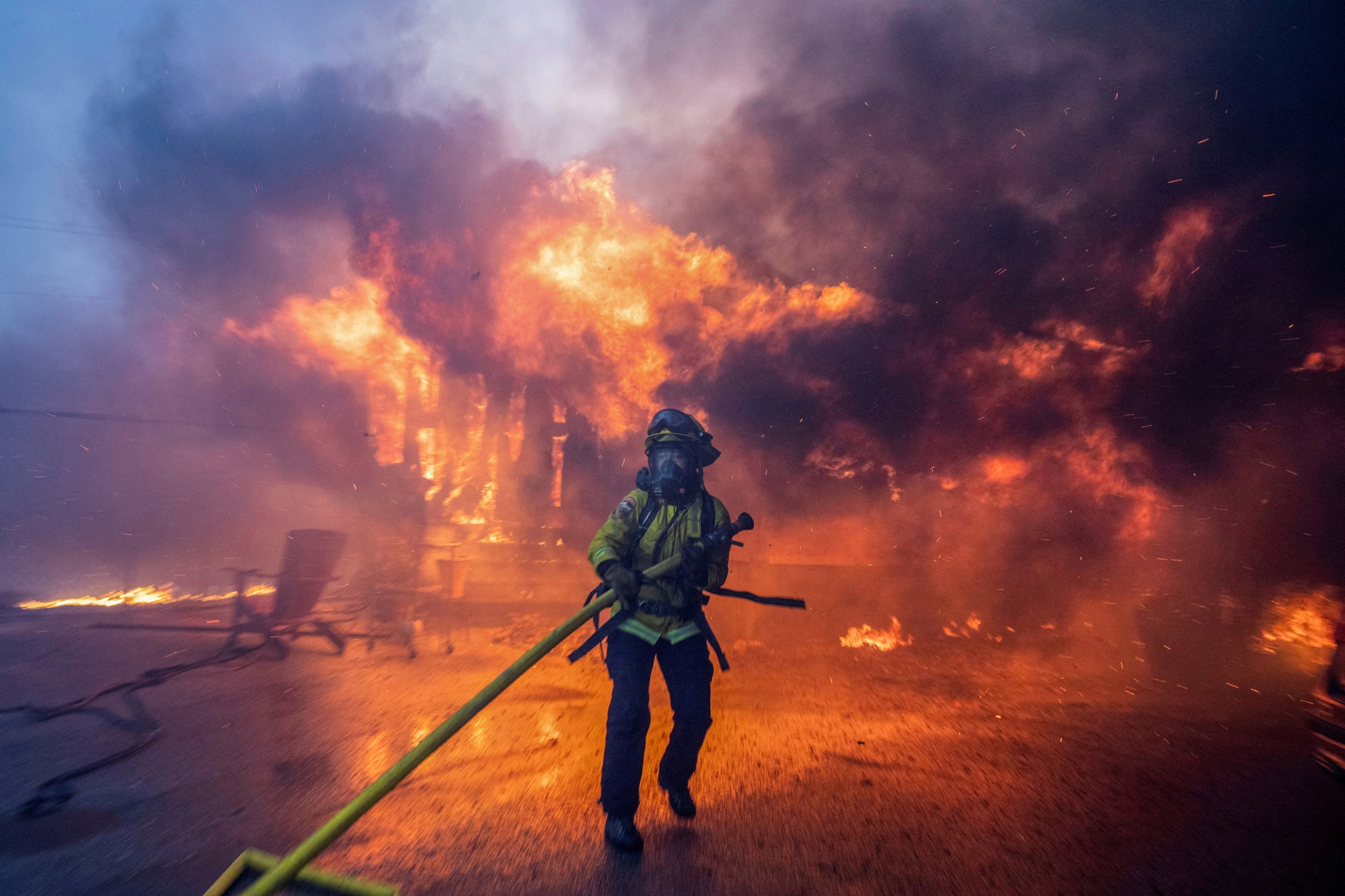
From January 7 to January 31, 2025, Southern California experienced one of the most destructive wildfire outbreaks in recent memory. Two major blazes—the Palisades Fire in Pacific Palisades and the Eaton Fire in the Altadena and Pasadena areas—caused widespread destruction across Los Angeles County and surrounding regions. According to the U.S. Environmental Protection Agency (EPA), United States Geological Survey (USGS), and Los Angeles County emergency management records, these fires together burned nearly 57,000 acres.
The Palisades Fire consumed approximately 23,700 acres, while the Eaton Fire scorched over 14,000 acres, spreading rapidly due to high winds and extremely dry weather conditions. These events are now among the most significant wildfires in the state’s history in terms of scope and impact.
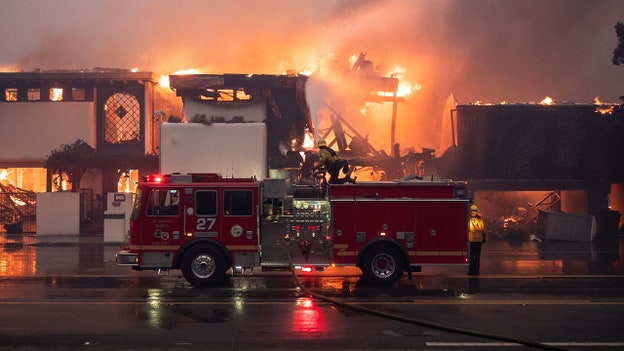
Human and Property Losses
The fires claimed the lives of at least 30 individuals and forced the evacuation of more than 200,000 residents, based on confirmed reports from CAL FIRE, People Magazine, and Reuters.
In terms of infrastructure, the Palisades Fire destroyed an estimated 6,837 structures and damaged an additional 973 properties, leading to 12 confirmed fatalities, including a firefighter who was injured during active containment operations.
The Eaton Fire was even more destructive, damaging or destroying over 9,418 structures and resulting in 17 confirmed deaths. When combined, the two wildfires led to the destruction or damage of more than 18,000 buildings, as verified by official statistics from Wikipedia, CAL FIRE, and local emergency response agencies.

Contributing Factors and Fire Spread Conditions
Although the exact ignition sources remain under investigation, fire authorities have identified multiple contributing factors that fueled the fires’ rapid spread. According to meteorological analyses and wildfire assessments published by The Guardian, ABC7 Los Angeles, and the New York Post, these include:
- Santa Ana Winds reaching near-hurricane speeds
- Extremely low humidity levels
- Prolonged drought conditions in the region
Notably, the Santa Ynez Reservoir, which provides over 117 million gallons of water for fire suppression in the hills, was critically low at the time. This water shortage created significant pressure issues in local hydrants and reduced the firefighting capacity during the initial hours of the outbreak.
Emergency Response and Suppression Efforts
The first emergency alert was logged on January 7, 2025, at 10:29 AM, via a 911 call to the Los Angeles Fire Department (LAFD). Despite swift action, initial containment efforts were hindered due to previous budget cuts to LAFD, which had reduced staffing levels and firefighting resources, according to Los Angeles Times and official government audits.
As the fires intensified, multi-state firefighting units from Oregon, Washington, Utah, New Mexico, Arizona, Montana, and Texas were deployed. Aerial firefighting support, including helicopters and air tankers, was coordinated through federal government assistance.
By January 31, 2025, both wildfires were officially reported as 100% contained by CAL FIRE and other responding agencies.
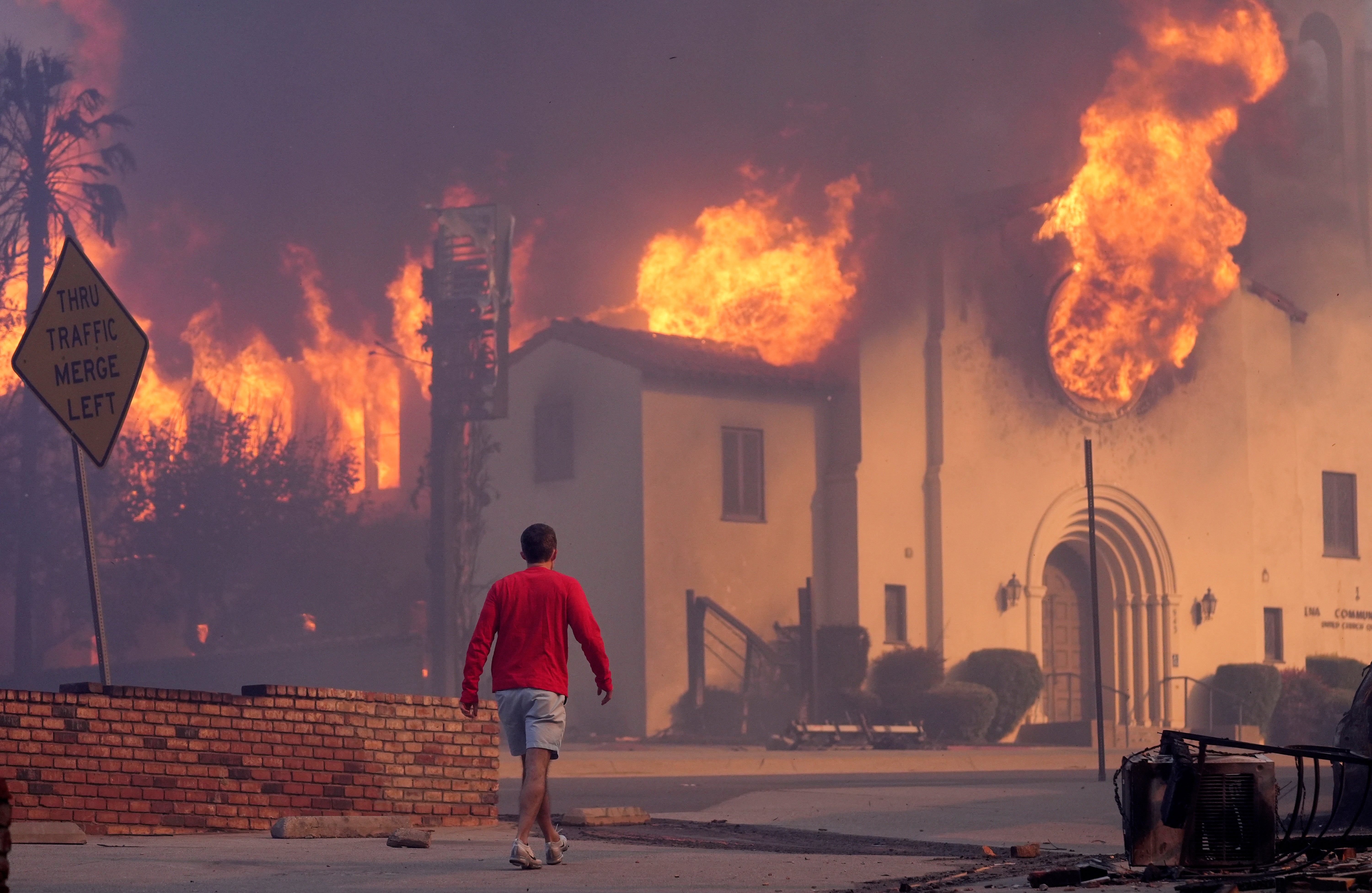
Economic Impact and Rebuilding Initiatives
Insurance and Financial Losses
Estimates from Business Insider, Los Angeles Economic Development Corporation (LAEDC), and People.com reveal staggering losses:
- Insured damages exceeded $20 billion
- Total economic impact may surpass $50 billion, including direct property damage and business interruptions
- LAEDC projected property losses between $28 to $53.8 billion
- Additional $5–9.7 billion in long-term economic disruptions is expected from 2025 to 2029
Rebuilding and Community Support
In response, a recovery initiative titled “LA Rises” was launched, starting with $2.5 billion in funding from the state government and private donors. Major contributions included $100 million from the Los Angeles Dodgers Foundation.
Public awareness and fundraising campaigns such as FireAid, Los Angeles Rising, and Super Bloom were organized with participation from leading musicians and celebrities to assist recovery efforts.
Environmental and Public Health Consequences
According to data from the U.S. EPA and California Air Resources Board, the fires caused serious environmental damage, including:
- PM2.5 air pollution levels peaking at 483 µg/m³, more than 10 times the EPA’s safety threshold
- Widespread respiratory issues, especially among individuals with asthma, COPD, or other pre-existing conditions
Additionally, federal cleanup efforts focused on removing hazardous waste such as:
- Electric vehicle batteries
- Compressed gas cylinders
- Agricultural chemicals
These efforts were coordinated by EPA and FEMA, aiming to reduce secondary environmental hazards post-fire.
Lessons Learned and Future Prevention Strategies
Funding and Infrastructure
Analysts have pointed out that the $17.6 million reduction in LAFD’s budget prior to the fires weakened emergency preparedness. This underlines the need for sustained funding for fire prevention and response programs.
Additionally, the failure of high-elevation water systems, including fire hydrant valves, highlighted the importance of maintaining water infrastructure for firefighting in vulnerable areas.
Emergency Coordination and Policy Improvements
Key strategies that improved disaster response included:
- Establishing Emergency Operations Centers (EOC) within 24 hours, which reduced response time by 40%
- Accelerated permitting policies that reduced post-disaster rebuilding timeframes from 120 days to 45 days
These policy improvements, according to LAEDC and the Office of Emergency Services, are expected to become models for future disaster planning statewide.
Conclusion
The Palisades Fire and Eaton Fire that ravaged Southern California in January 2025 stand among the worst wildfire events in California’s recent history. With over 57,000 acres burned, 18,000+ structures destroyed, and billions of dollars in losses, these events underscore the increasing risk posed by climate extremes, aging infrastructure, and underfunded emergency services.
While the immediate threat has been contained, the long-term recovery will take years. Crucial lessons from this disaster—especially in funding, infrastructure resilience, and interagency coordination—are essential for preventing similar devastation in the future.



Leave a Reply