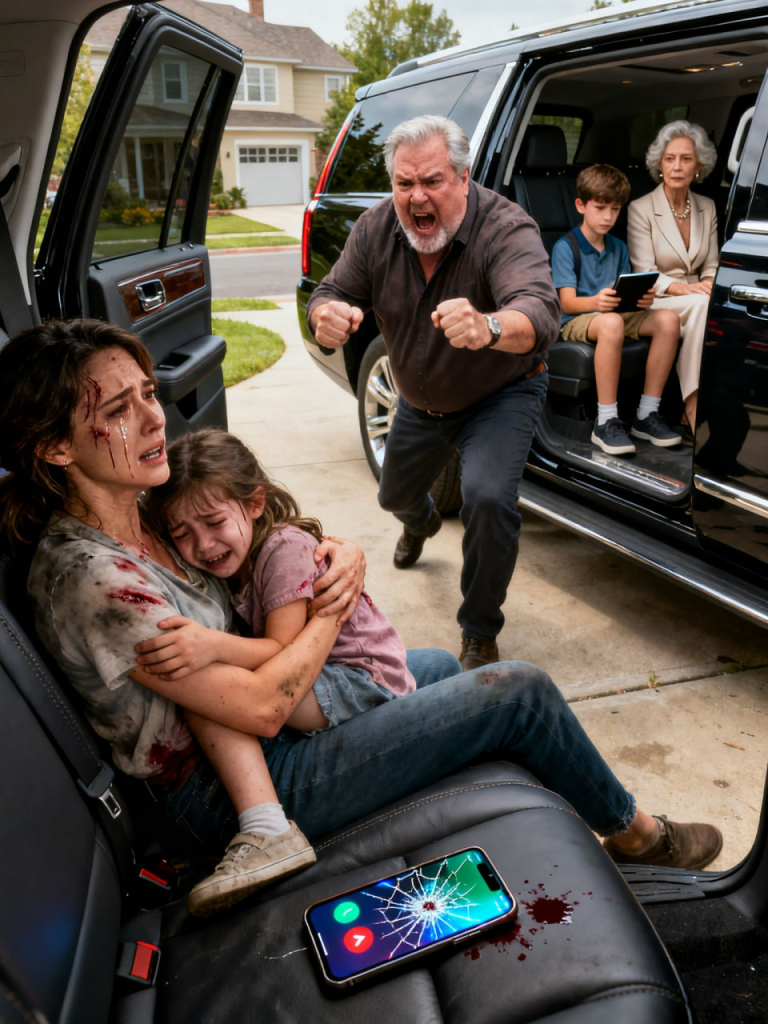
My name is Emma. I’m twenty-nine, and I’ve spent most of my life learning how to become small—how to fold myself into the corners of rooms so I wouldn’t give anyone a reason to look my way with disappointment.
In my family, attention was a prize. Melanie always won it.
My parents didn’t announce it like a policy—there was no formal meeting where they declared my older sister the favorite—but it lived in the air the way humidity lives in summer. It clung to everything. If Melanie brought home a B, she “worked so hard.” If I brought home an A, I “must’ve had an easy teacher.” If she cried, the world stopped. If I cried, I was “dramatic.”
By the time I was old enough to understand what favoritism was, it felt less like a bruise and more like a birthmark. I stopped asking why. I stopped expecting warmth. I stopped imagining my parents would someday wake up and realize I was their daughter too.
I thought I’d escaped it when I moved out at nineteen, when I built a life that didn’t require their permission. I thought marriage and motherhood would become my clean line in the sand: this is where their influence ends, where my child begins.
I was wrong.
Because a family like mine doesn’t like losing control. It doesn’t like watching you become happy without them. And when you return—just for a dinner, just for a birthday, just because you still have that stupid hopeful part inside you that keeps whispering maybe this time—they treat your return like proof that they still own you.
And they treat your child like proof that they can reach you anywhere.
Her name is Lily. She’s three. She has hair the color of brown sugar and a laugh that comes out like she’s surprised by it, like she’s delighted by her own joy. She calls ladybugs “tiny cows.” She says “I wuv you” with her whole face.
My parents call her “Emma’s kid,” as if she’s a package I showed up with, like luggage.
That day was supposed to be simple. That’s what I told myself, as if saying it would make it true.
Melanie was in town for the weekend. She lived two states away and liked to act as if her visits were royal tours. My mother, Diana, insisted we all go to lunch at a “nice place,” as if food with tablecloths could fix our history.
I almost didn’t go.
I stood in my kitchen that morning watching Lily spin in her socks, trying to put her arm through the neck hole of her sweater while humming something she’d made up. My husband, Mark, was already dressed for work, tie slightly crooked the way it always was when he was rushing.
He paused behind me, hands on my shoulders, and said softly, “You don’t have to.”
I wanted to say yes. I wanted to admit what my stomach already knew—that my parents didn’t want me there, they wanted the image of “family,” and I was the prop that made it look complete.
But my mother had sounded almost pleasant on the phone.
Almost.
“Bring Lily,” she’d said. “Your father’s been asking about her.”
That line should’ve scared me. Instead, it triggered the old reflex in my chest, the one that still believed approval was something you could earn if you just tried harder.
So I went.
Mark couldn’t come—meetings, deadlines, the adult excuses that used to sound like freedom until I learned how lonely they can feel. He kissed Lily’s forehead, kissed mine, and said, “Call me if you need me.”
I promised I would.
Then I loaded Lily into her car seat, buckled her in, and drove to my parents’ house with my hands tight on the wheel, as if gripping hard enough could keep the past from climbing into the passenger seat.
When we got there, my father’s truck wasn’t in the driveway. Relief flickered through me before I could stop it.
My mother opened the door and smiled, but her smile was the kind that never reached her eyes.
“Emma,” she said, like she was checking a box. Then her gaze dropped to Lily. “Well. There she is.”
Lily lifted her little hand. “Hi, Grandma!”
My mother leaned down and kissed Lily’s cheek with the air of someone doing a polite social gesture. “Hello, sweetheart.”
Inside, Melanie was already sitting at the kitchen island, sipping coffee like she’d been born holding a mug. She wore a white sweater that looked expensive and a smirk that looked inherited.
“There you are,” she said. “We were starting to think you’d flake.”
“I’m here,” I replied, forcing my voice to stay even.
Melanie’s eyes flicked to Lily. “Cute outfit.”
Lily beamed. “It has stars!”
Melanie made a sound that could’ve been a laugh if it wasn’t so sharp. “Of course it does.”
My mother busied herself with her purse, checking the mirror in the hallway. “Your father’s meeting us at the restaurant. He had to stop somewhere first.”
My stomach tightened again. The relief was gone, replaced by the familiar dread that came with Robert’s presence—the sense that any moment could turn, could sour, could become a memory I’d wish I could unlive.
“Why don’t we take one car?” my mother said, as if it was the most natural thing in the world. “Easier parking. Robert will drive.”
I opened my mouth to say no. I almost did. But the old training ran deeper than my adult logic. The part of me that still feared being labeled “difficult” clamped down.
“Sure,” I heard myself say.
When my father arrived, he came in like a storm that believed it was invited.
Robert wasn’t a big man, not physically. He wasn’t the type that looked frightening at first glance. That was part of what made him so dangerous—he could blend in at church, at barbecues, at office parties. He could smile and shake hands and talk about the weather.
But his anger lived close to the surface, like oil on water. One wrong movement and it would ignite.
He stepped into the kitchen, looked at Melanie, and his face softened immediately. “There’s my girl.”
Melanie slid off her stool and hugged him. He kissed the top of her head like she was still twelve.
Then his eyes landed on me.
His expression didn’t harden exactly—it just emptied. Like whatever warmth he had was reserved and already spent.
“Emma,” he said.
“Dad.”
His gaze shifted to Lily. He stared for a second too long, and Lily’s smile faltered. Then he grunted. “She’s gotten bigger.”
“She’s three,” I said, trying to keep it light.
“She’s loud,” he replied, and walked past me.
My mother laughed like it was a joke. Melanie smirked like it was an observation worth admiring.
I told myself it would be fine. I told myself lunch would be two hours, maybe three, and then I’d go home and shake it off like I always did.
We didn’t even make it out of the driveway before everything began to unravel.
Robert insisted Lily sit in the middle back seat so Melanie could sit behind the passenger side and “help if she needs something.”
I didn’t like that. I wanted Lily behind me, where I could turn and see her easily, where my body could feel like a shield.
But my father had already opened the back door and was leaning in with that impatient set to his jaw.
“Middle,” he ordered. “She’ll be fine.”
Lily looked at me, confused. “Mommy?”
“It’s okay,” I lied gently, helping her into position and buckling her in. The straps were snug, the clip at her chest. Safe. As safe as I could make her in a car with a man who saw kindness as weakness.
I climbed into the passenger seat. My mother sat behind me. Melanie behind the other side, close enough to Lily that her perfume made my throat itch.
As my father pulled out onto the road, Lily started chatting the way she always did in the car—pointing out trees, signs, a dog in someone’s yard.
“Doggy!” she squealed. “Hi doggy!”
My father’s jaw flexed.
“She’s just excited,” I said quickly.
“She can be excited quietly,” he snapped.
Lily’s voice dropped immediately, like a dimmer switch. “Okay.”
For about thirty seconds, there was peace.
Then Lily sniffed.
Not dramatic, not loud. Just a little inhale, the sound children make when they’re fighting a runny nose.
My father’s eyes narrowed in the rearview mirror.
“What is that?” he said.
Lily blinked. “My nose.”
“Stop it.”
She stared, confused. “Stop… my nose?”
My mother chuckled. “Oh, Robert.”
Melanie leaned forward a little, eyes bright with entertainment, like she was watching a show she’d paid for.
Lily sniffed again, softer this time, like she was trying to obey but her body wouldn’t cooperate.
Robert’s hand tightened on the steering wheel. “I said stop.”
“Dad,” I warned quietly. “She can’t just—”
He cut me off. “Don’t start.”
Lily took a breath, and it came out slightly louder—maybe because she was nervous now, maybe because she was trying not to cry. Her little chest rose and fell.
My father’s head snapped toward the back seat. “What is she doing?”
“She’s breathing,” I said, and heard the incredulous edge in my own voice.
Robert’s face darkened. “Too loud.”
Lily’s eyes widened. Her tiny hands curled around the stuffed bunny she’d brought, squeezing it like it could protect her.
“She’s three,” I repeated, louder now. “She’s not doing anything wrong.”
My mother laughed again, the same laugh she used when she wanted to pretend cruelty was humor. “Emma, don’t be so sensitive. Your father’s joking.”
But he wasn’t. I could see it in the way his shoulders stiffened, in the way his gaze sharpened like a blade.
“She’s making noise,” he said, each word clipped. “And I’m driving.”
Lily whispered, “I can be quiet.”
“Then do it,” Robert snapped.
Silence fell. The kind of silence that feels like a hand over your mouth.
We drove like that for a minute. Two.
Then Lily coughed.
It was a small cough. The kind children do when their throat tickles.
Robert slammed his palm against the steering wheel hard enough that the horn blared. Lily jolted in her seat, bunny flying up and landing on her lap.
“For God’s sake!” he barked. “Can’t you control her?”
My heart began to race. “She just coughed.”
“She’s doing it on purpose,” he insisted, eyes wild in the mirror.
Melanie leaned forward, grinning. “Maybe she needs a muzzle.”
My mother made an approving noise. “Melanie.”
“What?” Melanie said. “Dad’s trying to drive. Some kids are just… too much.”
Lily’s lower lip trembled. “Mommy…”
I twisted in my seat, reaching back as far as my seatbelt would allow, palm open. “Lily, it’s okay. Sweetheart, you’re okay.”
My father’s voice sliced through the air. “Stop talking to her like she’s a baby.”
“She is a baby,” I snapped before I could stop myself. “She’s three!”
The car swerved slightly. Robert glared at me. “You want to drive?”
“I want you to stop yelling at her.”
“You always have to make everything a fight,” my mother said from behind me, sighing dramatically as if I was the problem. “Just let your father handle it.”
Melanie’s smirk deepened. “Yeah, Emma. Relax. If she’s breathing too loud, just tape her mouth.”
The words hit the air like a match.
I stared at my sister, thinking surely she couldn’t mean—
Then my father nodded, once, slow.
“That’s not a bad idea,” he said.
My stomach dropped. “No.”
My mother laughed again, lighter this time, like it was clever. “Robert, don’t.”
But her tone was teasing, not serious. Like she was flirting with his anger instead of stopping it.
“I have tape in the glovebox,” my father said.
My pulse thundered in my ears. “Absolutely not.”
Robert’s eyes flashed. “Don’t tell me what to do in my car.”
“It’s my child,” I said, voice shaking now. “You are not putting tape on her mouth.”
Melanie leaned back, arms crossed, watching me like she couldn’t wait to see me lose. “God, you’re so dramatic.”
I turned fully, twisting against my seatbelt to look at Lily. Her eyes were huge and wet. She wasn’t making a sound now. She was trying so hard to be invisible.
And something in me snapped—not like my father, not with rage that wanted to destroy, but with clarity so sharp it hurt.
I had spent my whole life being trained to accept this. To laugh when they were cruel. To swallow my protest. To make myself smaller so they could feel bigger.
But Lily didn’t have decades of practice. Lily was just… Lily.
And they were enjoying her fear.
My father reached one hand toward the glovebox.
“Robert,” I said, low and dangerous. “If you touch that tape, I’m calling the police.”
My mother scoffed. “Emma, don’t be ridiculous.”
Melanie rolled her eyes. “Here we go.”
Robert’s fingers closed around something unseen. His knuckles whitened.
Then he did something I still replay in my mind like a broken video: he leaned back, shifting his body while driving, and reached into the back seat with his right arm—toward Lily.
I screamed his name.
Lily’s face crumpled. She sucked in a breath, sharp with panic, and her little voice came out strangled. “No—!”
My father’s hand grabbed at her chin. I heard the ripping sound of tape tearing free.
I lunged across the center console, seatbelt cutting into my shoulder, hands flailing for his arm. “Stop! STOP!”
The car veered. Tires hissed against asphalt. My mother shouted something that didn’t sound like concern—it sounded like annoyance.
“Robert, watch the road!”
Melanie laughed. Actually laughed. “Oh my God, Emma—”
Robert pressed the tape to Lily’s mouth.
Her muffled cry vanished under it.
For half a second, everything inside me turned to ice. I could see Lily’s eyes, wide and terrified, and the tape smeared across her lips like a cruel joke.
Then Lily’s little hands came up, frantic, trying to pull it off.
Robert slapped her hands away.
That was the line.
Not the yelling. Not the insults. Not even the tape itself—though that alone should’ve been unforgivable.
It was the slap. The way he treated my daughter’s hands like they were an inconvenience.
I didn’t think. I reacted.
I grabbed my phone from my purse with shaking fingers and hit 911.
The operator answered quickly, calm voice in my ear. “911, what’s your emergency?”
“My father is—” My voice broke. “He just taped my three-year-old’s mouth shut while he’s driving. He—he hit her hands. Please. Please send someone.”
In the background, Robert roared, “Are you calling the cops on me?”
“Yes!” I screamed, and I didn’t care that my mother gasped like I’d committed the crime.
“You ungrateful—” Robert reached again toward Lily, and Lily jerked back, trapped by her car seat, trapped by the tape, making tiny panicked sounds she couldn’t fully release.
The operator’s voice sharpened. “Ma’am, where are you?”
I gave her the road name, the direction, the cross street. My fingers trembled so hard I almost dropped the phone.
“Stay on the line,” she said. “Are you safe right now?”
“No,” I choked. “My child—she can’t—she’s—”
I twisted, trying to reach the tape, but Melanie grabbed my wrist.
“Stop,” she hissed. “You’re making it worse.”
I stared at my sister like she was a stranger. “Let go of me.”
She tightened her grip. “You’re going to get Dad arrested over tape?”
“It’s my daughter!”
My mother leaned forward from behind me, voice sweet and poisonous. “Emma, hang up. This is embarrassing.”
“Embarrassing?” My laugh came out hysterical. “He taped her mouth!”
Robert swerved again, yelling, “I’ll pull this car over and—”
Lily made a sudden choking noise—small, muffled, wrong.
My head snapped back toward her.
Her face was turning blotchy red, eyes squeezed shut, her body arching as she struggled to breathe through panic and tape and snot and terror.
“Lily!” I screamed.
Everything blurred. I heard the operator saying something, asking something, but it sounded far away.
I ripped my arm free from Melanie’s hand and lunged backward as far as I could, fingers clawing for the edge of the tape.
Robert’s arm shot back again, trying to stop me. He shouted, “Don’t touch her!”
I grabbed the tape and yanked.
It pulled away with a sickening sound. Lily sucked in air like she’d been underwater. Her mouth opened in a soundless scream.
Then her eyes rolled slightly, and her body went limp against the seat.
For a beat, my brain refused to accept what I was seeing.
“No,” I whispered. “No, no, no—Lily? Lily!”
Her head lolled to the side. Her bunny slid from her lap to the floor.
I heard myself screaming, a sound I didn’t recognize as mine. The phone was still pressed to my ear, the operator now urgent.
“Ma’am, is the child conscious?”
“My baby—she’s not moving,” I sobbed. “She’s not—oh my God—she’s not moving!”
“Check her breathing,” the operator instructed. “Tell me if she’s breathing.”
I twisted so hard my seatbelt cut into my ribs. I leaned back, eyes locked on Lily’s chest. For a terrifying second, I didn’t see it rise.
Then—barely—there was a small flutter. A shallow breath.
“Yes,” I gasped. “She’s breathing but—she’s not waking up.”
Robert slammed the brakes. The car jolted. My mother yelped. Melanie cursed.
We were on the shoulder now, hazard lights blinking like frantic eyes.
Robert spun toward the back seat, face pale now, anger replaced by a flicker of fear he tried to bury. “She’s fine.”
“She’s unconscious!” I screamed. “You did this!”
“I didn’t do anything!” he shouted back, and it was almost comical, the way he tried to rewrite reality even while my daughter lay limp behind him.
The operator said, “Help is on the way. Stay on the line. Do not let anyone leave.”
My father’s head snapped toward my phone. “Give me that.”
His hand shot out.
I moved faster. I opened my door and stumbled out onto the shoulder, still holding the phone, chest heaving. Cold air hit my face like a slap. Cars hissed past, indifferent.
I ran to the back door and yanked it open.
Lily was slumped in her seat, cheeks streaked with tears that had dried too quickly. Her lashes were wet. Her mouth was free now but still slightly swollen from where the tape had been.
I unbuckled her with clumsy fingers and lifted her into my arms.
She felt too heavy.
Not heavy like a sleepy toddler—heavy like a body that wasn’t helping.
“Lily,” I begged, rocking her. “Baby, wake up. Please wake up.”
Behind me, I heard my mother’s voice, sharp. “Emma, you’re overreacting.”
I whirled on her, still clutching Lily. “Overreacting?” My voice shook with rage. “If she dies—”
“Stop,” my mother snapped. “Don’t say that word.”
Melanie climbed out, looking irritated more than worried. “She probably just held her breath to get attention.”
I stared at my sister. “You think my child faked passing out?”
Melanie shrugged. “Kids do weird stuff.”
My father approached, hands raised like he was the reasonable one. “Give her to me.”
I backed away instantly. “Don’t touch her.”
He stepped forward anyway. “I said give her to me.”
The operator’s voice in my ear was steady. “Ma’am, keep yourself and the child safe. Officers are responding. An ambulance is responding.”
I could hear sirens in the distance, faint at first, then growing louder.
Robert heard them too. His face hardened again, fear turning back into anger because anger was the only emotion he knew how to live with.
“You did this,” he hissed at me. “You always ruin everything.”
My laugh was raw. “No. You did this. And it’s recorded.”
His eyes flicked to my phone. For the first time, I saw real panic.
My mother’s lips parted. “Recorded?”
I held Lily tighter, my arms aching. “Every word.”
The sirens grew close enough that I could feel them in my chest.
Two police cars pulled in behind us, lights flashing. An ambulance followed, red and white like a warning.
An officer approached first, one hand near his belt, eyes scanning the scene. “Ma’am, are you the caller?”
“Yes,” I said, voice broken. “My daughter—she—”
The paramedics were already moving toward me, brisk and focused. One of them, a woman with kind eyes, said, “Hi, I’m Jen. We’re going to take care of her, okay?”
I nodded, tears streaming. “Please.”
They took Lily from my arms gently but efficiently, laying her on a stretcher. One checked her pulse, another shone a light in her eyes. They spoke in calm, clipped phrases I couldn’t fully process.
The officer turned toward my father. “Sir, what happened?”
Robert’s voice immediately shifted into performance mode—indignant, offended. “My daughter is hysterical. The kid was being loud, she started crying, and now Emma’s calling cops like I’m some criminal.”
My mother chimed in, too smoothly. “It was just a misunderstanding. Emma’s always been… emotional.”
Melanie nodded, arms crossed, looking smug. “Yeah. She’s making a big deal out of nothing.”
The officer looked back at me. “Ma’am?”
I held up my phone, hands shaking. “He taped her mouth shut. While driving. And hit her hands when she tried to pull it off. I called 911 while it happened. It’s all on the call.”
The officer’s eyes sharpened. “Sir, did you put tape on the child’s mouth?”
Robert scoffed. “It was a joke. A little strip. It wasn’t even—”
“That’s a yes,” the officer said flatly.
Robert’s face reddened. “You people are ridiculous.”
Another officer stepped closer. “Sir, turn around.”
My mother’s voice rose, panicked now. “Oh, don’t be dramatic—”
The officer didn’t look at her. “Ma’am, step back.”
They handcuffed my father on the side of the road like he was any other man who had crossed a line.
Because he was.
And for once, reality didn’t bend itself around him.
My mother stood frozen, mouth opening and closing like she couldn’t find the right manipulation fast enough. Melanie looked stunned, her smirk finally gone.
Robert twisted against the cuffs. “Emma!” he shouted. “You’re ruining the family!”
I stared at him, heart hammering, and said the words I’d never said out loud before.
“There was never a family. There was you. And your cruelty. And everyone who laughed.”
His eyes burned with hatred.
I didn’t flinch.
Because Lily was being loaded into the ambulance, and the paramedic was saying, “We need to go now.”
I climbed into the ambulance beside my daughter, my hand gripping hers. Her fingers were limp, small and perfect, like something sacred.
The doors shut with a heavy clang that felt like a chapter closing.
As the ambulance pulled away, I looked through the small rear window and saw my mother standing on the shoulder, her hand pressed to her mouth—not in grief, not in horror, but in disbelief that the world hadn’t sided with her.
Melanie stood beside her, jaw tight, like she was already rehearsing a version of this story where she was the victim.
And my father sat in the back of a squad car, staring at the ambulance like it had stolen something from him.
It had.
It had stolen his control.
At the hospital, everything became fluorescent and fast.
Doctors asked questions. Nurses clipped sensors onto Lily’s finger. Someone put an oxygen mask near her face. Someone else asked me to sign forms with hands that didn’t feel like mine.
I answered in fragments, like my voice belonged to a different person.
“Yes, she’s three.”
“No, no allergies.”
“She was scared, she was crying, he taped her mouth—”
A doctor with tired eyes told me Lily had likely passed out from a mix of panic and restricted breathing—“a brief loss of consciousness,” he said carefully. He didn’t accuse me. He didn’t blame me. But I heard the unspoken thing anyway:
This was preventable.
I sat in a chair beside Lily’s bed while she slept, her chest rising and falling more steadily now. She looked so small under the hospital blanket, like the world was too big and too sharp for her.
Mark arrived an hour later, face white, eyes frantic. He nearly collapsed when he saw Lily.
“What happened?” he demanded, voice shaking with fury.
I told him everything.
When I reached the part about the tape, Mark’s hands clenched into fists so tight his knuckles went pale.
“Oh my God,” he whispered, like the words were too ugly to say loud.
I nodded, tears spilling again. “The police have it. The call. They heard everything.”
Mark kissed Lily’s forehead gently, then turned to me and pulled me into his arms. For a moment, I let myself break. I cried into his shoulder like I was fourteen again, like I was eight, like I was newborn and already unwanted.
But then I pulled back, wiping my face.
“I’m done,” I said, and my voice was steadier than I felt. “I’m done letting them near her. I’m done letting them near me.”
Mark nodded. “Good.”
That night, while Lily slept and machines beeped softly, a detective came to take my statement.
He was calm, professional, but there was something tight around his mouth when I described my father reaching back while driving, described Lily’s muffled panic, described my mother laughing.
“Your 911 call is evidence,” he said. “And the officers noted the tape in the vehicle.”
I swallowed. “Are they… going to take this seriously?”
He looked at me for a long moment. “Yes. We’re taking this seriously.”
Relief hit me so hard I almost cried again.
Then guilt followed, because relief meant I’d expected them not to. Because my whole life had taught me that my pain didn’t count unless someone else decided it did.
The detective asked, “Has he ever done anything like this before?”
I hesitated. My mind flashed through years: my father’s shouting, my mother’s laughter, Melanie’s smirk. The constant message that discomfort was just “discipline,” that fear was just “respect.”
“Not to Lily,” I said slowly. “But… yes. To me.”
He nodded as if he’d expected that.
The next few days were a blur of doctors and social workers and paperwork. Lily woke up the next morning groggy and confused. She asked for her bunny. She asked for Mark. She asked why her mouth hurt.
When she looked at me, her eyes filled with tears.
“Grandpa mad,” she whispered.
My throat tightened. “Grandpa was wrong,” I said, stroking her hair. “He was very wrong.”
Lily’s lip trembled. “I breathed.”
I held her face in my hands gently. “Listen to me, sweetheart. Breathing is never bad. Breathing is how you live. You didn’t do anything wrong. Not ever.”
She stared at me like she was trying to understand a rule that should’ve been obvious but had been made confusing.
Then she leaned into my chest and clung like she didn’t trust the world yet.
I didn’t blame her.
The legal process started fast—faster than I expected. There were protective orders, interviews, court dates.
My mother called me the first time while I was sitting beside Lily’s bed.
I stared at the phone screen: Mom.
My hand shook. Mark watched me, jaw set.
“Don’t answer,” he said.
But I did anyway, because part of me still wanted to hear her say she was sorry. Still wanted a miracle.
“Hello,” I said.
My mother’s voice was clipped. “What have you done?”
No apology. No concern. Just accusation.
I laughed, bitter. “What have I done? Lily was unconscious.”
“She’s fine now, isn’t she?” my mother snapped. “And you got your father arrested like a criminal.”
“He is a criminal,” I said, surprised by the steadiness in my voice.
“He was joking,” she insisted. “He didn’t mean harm.”
I pictured Lily’s limp body. “Intent doesn’t undo damage.”
My mother inhaled sharply, like she was offended by my logic. “You always twist things. You always—”
“Stop,” I said, and my voice cut through her like scissors. “Stop rewriting what happened. I heard her choking. I saw her pass out. And you laughed.”
Silence.
Then my mother said, softer, colder, “Melanie says you’ve always been jealous.”
I felt something inside me settle, like a door locking.
“This conversation is over,” I said. “Do not contact me again.”
“Emma—”
I hung up.
It felt like stepping off a cliff and discovering the ground was there all along.
After that, Melanie texted. A long message full of words like “overreaction” and “family loyalty” and “Dad’s reputation.” She said I was ruining their lives.
I didn’t reply.
Because Lily’s life mattered more than their reputation.
The 911 recording became the thing no one could argue with. My father could claim he was joking. My mother could claim she didn’t see. Melanie could claim she didn’t mean it.
But the call captured everything: Lily’s muffled panic, my father’s shouting, my mother’s laughter, Melanie’s voice suggesting tape like it was a clever solution.
It captured the moment Lily went silent.
It captured my scream.
It captured my begging.
There are sounds you can’t unheard.
In court, my father tried to look like a misunderstood man who’d been betrayed by an ungrateful daughter. He wore a nice shirt. He kept his chin lifted. He acted offended.
My mother sat behind him, eyes bright with indignation, clutching her purse like a shield. Melanie sat beside her, face tight, fury simmering under her skin.
When the judge asked about the 911 call, my father’s lawyer tried to frame it as hysteria. As panic. As exaggeration.
Then the recording played.
The courtroom filled with my father’s voice, sharp and ugly. Filled with my mother’s laugh. Filled with Melanie’s smirk turned into sound.
And then there was Lily’s muffled cry.
My stomach lurched. My hands trembled. Mark’s fingers tightened around mine.
My father’s face changed as the recording continued. He couldn’t control it. He couldn’t charm a recording. He couldn’t intimidate it.
He looked smaller.
For the first time in my life, Robert looked like a man being seen clearly.
When it ended, the courtroom was silent.
The judge’s voice was cold. “This is deeply troubling.”
My father started to protest, but the judge cut him off.
“Enough.”
In the weeks that followed, my father faced charges related to child endangerment and assault. I can’t describe every legal step in perfect detail because even now it makes my chest tighten, but I can tell you this:
For once, consequences existed.
My mother never apologized. She sent messages through relatives, through friends, through anyone willing to play messenger. She said I was destroying the family. She said Lily would “get over it.” She said I was “holding a grudge.”
I didn’t call it a grudge.
I called it a boundary.
We moved, quietly. Not far, but far enough that my parents couldn’t just show up. We changed routines. We installed cameras. We told Lily’s daycare exactly who was allowed to pick her up.
Lily started therapy with a child specialist who used dolls and drawings to help her process fear. For a while, Lily would flinch at loud voices. She’d press her hands to her mouth when she got scared. The first time she did that, I had to lock myself in the bathroom and sob into a towel so she wouldn’t hear.
Mark was steady through all of it. He never once suggested I “forgive” for peace. He never once asked me to “be the bigger person.” He simply protected us, like love should.
One night, months later, Lily climbed into my lap with her bunny tucked under her arm. She touched my cheek gently and said, “Mommy sad?”
I swallowed. “Sometimes.”
She nodded solemnly like she understood. “I breathe quiet now.”
My heart cracked all over again. I pulled her closer. “No, baby. We’re not doing that. You can breathe loud. You can laugh loud. You can be loud. You’re allowed.”
She looked at me, searching my face for the old trap.
“Promise?” she whispered.
“I promise,” I said, and meant it so hard it felt like a vow carved into bone.
That was when I realized something: my daughter wasn’t just healing from one moment in a car.
She was healing from a family pattern that had existed long before she was born.
And so was I.
I still have nightmares sometimes. In them, I’m trapped in the passenger seat again, twisting helplessly while my father reaches back. In them, my mother laughs and laughs and laughs like cruelty is a lullaby. In them, Melanie smirks like pain is entertainment.
But then I wake up, and Lily is asleep in her room, safe. Mark is beside me, breathing evenly. The house is quiet in the way peace is quiet—not the way fear is quiet.
Sometimes, on mornings when the sunlight is soft, Lily runs into the kitchen and sings nonsense songs at the top of her lungs. She tells me about tiny cows and rainbow puddles. She demands pancakes shaped like hearts.
And I let her be loud.
Because the loudness is life.
Because my father tried to punish her for existing, and the world finally said no.
Because I finally said no.
And because the line he crossed—the line I can never forgive—became the moment I stopped trying to be wanted by people who only loved me when I was silent.
I don’t miss them the way I thought I would.
I miss the idea of parents, the fantasy version where a mother would’ve grabbed the tape from his hand and screamed at him to stop, where a sister would’ve shielded my child instead of smirking, where a father would’ve apologized and meant it.
But I don’t miss my reality.
My reality is Lily’s laugh echoing through our home.
My reality is Mark’s hand in mine.
My reality is learning, slowly, that love doesn’t demand you shrink.
It lets you breathe.

Leave a Reply