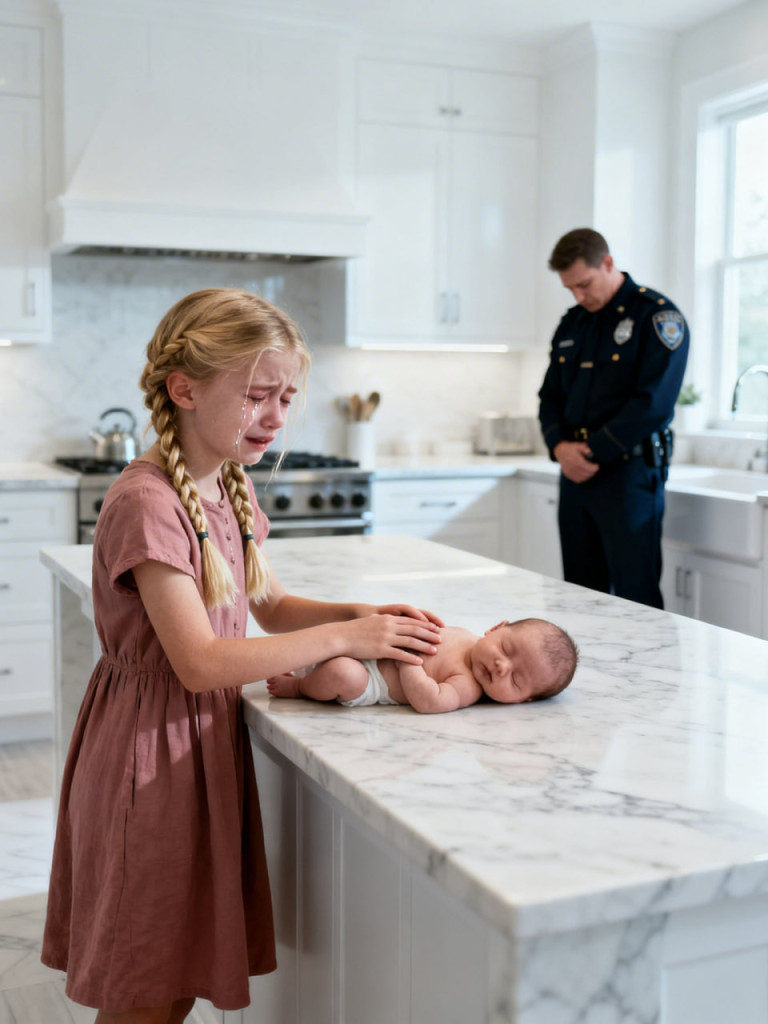
The Call No Child Should Ever Have to Make
The dispatcher had spent years answering emergency calls—long enough to believe she had heard every shade of fear a human voice could carry.
Some callers shouted so loudly their words tumbled over each other. Others spoke in anger, sharp and fast. There were also those who sounded strangely calm, as if their minds had stepped aside to survive the moment.
But this voice—this one—was different.
It was small. Carefully quiet. The kind of quiet that didn’t mean peace. The kind that meant a child had learned that sound could be dangerous.
The screen on Carla Jensen’s console lit up:
WIRELESS CALL — UNKNOWN LOCATION
CALLBACK AVAILABLE
Carla straightened in her chair, the headset pressing into the soft spot behind her ear. The night shift in the county dispatch center was usually a slow crawl: the occasional drunk driver, a domestic argument that ended with slammed doors, an elderly man who had fallen and insisted he was “fine” while gasping through pain.
Carla clicked the line open.
“911, what’s your emergency?”
A pause.
Then, a whisper so thin it barely made it through the speaker.
“Hi… I’m sorry.”
Carla’s hand froze over the keyboard. “You don’t have to apologize. Can you tell me your name?”
Another pause. Breathing. Like the caller was pressing the phone close to her mouth and trying not to let it touch her lips.
“Lily.”
“How old are you, Lily?”
“Seven.”
Carla’s stomach tightened, but her voice stayed steady. “Okay, Lily. You’re doing great. Where are you right now?”
“I’m in my house,” Lily whispered.
“Can you tell me your address?”
Silence.
Then, in the same careful whisper: “I don’t know it. Mom says it’s not for kids.”
Carla forced herself to breathe slowly, to keep the rhythm of calm that callers needed to borrow.
“That’s okay,” she said gently. “Can you look around for mail? Or maybe a piece of paper with numbers on it?”
“I can’t,” Lily whispered. “If I move he might cry.”
Carla’s fingers curled around her pen. “Who might cry, honey?”
“My baby,” Lily said, and the words trembled as if they’d been holding up something heavy for a long time. “He’s… he’s getting lighter.”
Carla felt her scalp prickle. “What do you mean, he’s getting lighter?”
Lily sniffed once, quiet as a mouse. “When I hold him. He used to be heavy. Now he’s not. He’s… like my backpack when it’s empty.”
Carla’s throat tightened. She kept her tone smooth and warm.
“Is your baby breathing right now?”
“Yes,” Lily whispered. “But it’s… like when you sleep and you forget to breathe and then you do it fast.”
Carla’s eyes moved to the screen’s location estimate—broad, uncertain, a cluster of cell tower pings that covered a few miles. Not enough.
“Okay,” Carla said. “I want you to keep holding him, just like you are. You’re doing exactly the right thing. Is there an adult in the house with you?”
“No.”
“Where is your mom?”
Lily hesitated. “She left.”
“When did she leave?”
Lily’s whisper grew smaller. “A long time.”
Carla’s fingers hovered over the dispatch button. “A long time like… hours? Or days?”
Lily’s breath hitched.
“Like… when the sun went away and came back and went away again,” she said.
Carla’s heart dropped.
Two nights.
Possibly more.
Carla pressed the dispatch key, her voice low but urgent to her partner across the room. “I need a unit rolling now. Possible child neglect, infant in distress. We don’t have an address.”
Her partner’s chair squeaked as he moved fast.
Carla returned her full attention to Lily. “Lily, I’m going to stay on the phone with you. I’m going to send someone to help you and your baby. Can you tell me what you see outside your window?”
“I can’t go to the window,” Lily whispered.
“That’s okay. Can you tell me what room you’re in?”
“The living room,” Lily said. “On the floor. The couch is… too big. The baby can roll.”
Carla swallowed. “Is there any food in the house?”
Lily hesitated. “I ate crackers yesterday. There was a can but I didn’t know how.”
Carla squeezed her eyes shut for half a second, then opened them again, focusing on the task like it was a rope she had to keep hold of.
“Lily,” she said softly, “what’s your baby’s name?”
“Eli.”
“How old is Eli?”
“I don’t know,” Lily whispered. “He’s not big. Mom said he’s still new.”
Carla’s pen moved across paper as she wrote:
Child caller: Lily, age 7
Infant: Eli, “still new,” breathing fast, “getting lighter”
No adult present, mother gone ~2 nights
No address
Carla forced herself into the next step. “Lily, is your front door locked?”
“I think so.”
“Can you see the front door from where you are?”
“Yes.”
“Good. I want you to keep the phone with you. Do you hear any cars going by outside? Any dogs barking? Anything that might help me know where you are?”
Lily stayed silent for a moment.
Then: “Sometimes a train goes… not close but loud.”
Carla looked up at the county map pinned on the wall. The train line ran through the older parts of town—rows of duplexes, aging apartment buildings, small houses built when the mills were still running. The kind of neighborhoods people drove through without looking.
Carla pressed her talk button to the radio channel. “Units, we’ve got a seven-year-old calling in with an infant in distress. Unknown location. Possible near train tracks. Cell ping indicates west side quadrant, grid between Ashford and Millbrook. Start canvassing—look for any residence with no lights, signs of children.”
A hiss of radio static, then voices responding.
“Unit 12, copy.”
“Unit 7, en route.”
“Unit 3, starting grid.”
Carla stayed with Lily, feeding her calm the way you feed warmth to someone who’s freezing.
“Lily,” she said, “you’re incredibly brave. I need you to keep talking to me. Does Eli feel warm or cold?”
“Cold,” Lily whispered. “His hands.”
Carla’s grip tightened on her pen. “Do you have a blanket?”
“Yes. The blue one.”
“Can you pull it up over him a little without moving him too much?”
There was soft rustling. A tiny whimper—a baby sound that made Carla’s chest ache.
“It’s okay,” Lily whispered, and the tenderness in her voice was almost too much. “Shhh. It’s okay. I called. I called.”
Carla blinked hard.
She did what dispatchers did: she took fear and turned it into steps. Questions. Instructions. A bridge from panic to help.
But she couldn’t stop thinking about what Lily had said.
My baby is getting lighter.
No seven-year-old should know what that means.
No seven-year-old should have to notice.
A Quiet Officer
Officer Ben Carter had been with the Westbrook Police Department for eight years. In a town like Westbrook—one of those medium-sized American towns that lived between “big city problems” and “small town friendliness”—being a cop meant you did a little of everything.
Traffic accidents. Noise complaints. Shoplifting at Walmart. Domestic calls where you stood between two people who still loved each other in some twisted way.
Ben was known around the department as quiet. Not unfriendly—just… measured.
He didn’t fill space with jokes the way some officers did. He didn’t brag. He didn’t talk much about his own life. He did his job, wrote clean reports, and when things went sideways, he stayed calm.
Some people mistook that calm for distance.
Ben knew better.
His calm was a dam.
And behind it lived all the calls he couldn’t forget.
The radio crackled while he sat in his patrol car at the edge of his grid, the dashboard casting blue-green light over his hands.
“Unit 12, possible child neglect, infant distress, unknown location, west side quadrant. Canvass between Ashford and Millbrook.”
Ben’s eyes lifted to the street ahead. Old houses. Some boarded windows. Some porch lights flickering. The kind of place where you could pass ten homes and never see a face.
“Unit 12, copy,” he said, and put the car in drive.
As he rolled forward, he remembered a moment from the academy—an instructor telling them that sometimes the worst calls weren’t loud. Sometimes they were quiet. Sometimes the danger was inside a house that had been ignored so long no one even thought to check.
Ben drove slowly, scanning.
No screaming. No lights flashing. Just normal night.
But he’d learned that “normal” could hide almost anything.
He turned onto a narrow street running parallel to the train tracks. A chain-link fence leaned at odd angles, bent like it had given up. A stray cat watched his cruiser pass, then vanished under a parked truck.
Ben eased along, eyes moving from porch to porch, window to window.
Then he saw something.
A second-story window with a curtain slightly open.
Behind it, a small face.
Ben’s foot moved from gas to brake so smoothly it barely jolted the car.
The face disappeared instantly.
Ben’s heart thudded once, hard.
He pulled to the curb and killed the headlights, leaving the car in a low glow of parking lights. He listened.
Nothing.
No voices. No TV. No music.
Just the distant rumble of a train somewhere farther down the line, the sound faint but present—like an animal breathing in the dark.
Ben stepped out, keeping his movements slow. If there was a child inside, he didn’t want to scare them into hiding deeper.
He approached the house.
It was a duplex, paint peeling, porch sagging. The mailbox hung open like a mouth. The yard was patchy dirt with a single plastic toy half-buried in the mud.
Ben glanced up at the second-story window again.
No face now.
He knocked.
No answer.
He knocked again, louder. “Police department. It’s okay. I’m here to help.”
Silence.
Ben’s radio chirped softly. “Unit 12, status?”
Ben pressed the button. “Possible location. Duplex on Carson near tracks. Stand by.”
He listened again—really listened.
And there it was.
A sound so faint he almost missed it.
A baby’s cry.
Not a full, hungry wail. Not angry.
Weak.
Ben’s jaw tightened.
He tried the doorknob.
Locked.
He knocked again. “Lily? If you’re inside, it’s Officer Carter. Can you come to the door?”
A pause.
Then, the faintest shuffle.
Locks clicked—slow, uncertain.
The door opened just a crack.
A small girl stood there, barefoot, hair messy, holding a phone in one hand and… something else in the other.
A baby.
The baby’s head lolled against her shoulder in a way that made Ben’s stomach turn.
The girl’s eyes were wide and too old.
“You’re real,” she whispered.
Ben crouched immediately so he wasn’t towering over her. He softened his voice the way he’d learned to do on calls with kids.
“I’m real,” he said. “You did the right thing calling. My name’s Ben. Are you Lily?”
She nodded once, quick and small.
Ben’s gaze went to the baby. The infant’s skin looked pale, lips dry. Eyes half-open but unfocused.
“Is this Eli?” Ben asked.
Lily nodded again, gripping him tighter like she thought the baby might float away.
Ben’s radio buzzed. “Unit 12?”
Ben pressed the button, keeping his eyes on Lily. “Confirmed. I have child caller and infant. Need EMS immediately. Possible dehydration, malnutrition. Send now.”
He looked back at Lily. “Is it okay if I come inside?”
Lily hesitated—like she had been trained to say no to adults entering.
Then she stepped back, letting him in.
Ben crossed the threshold and felt the air hit him.
Stale. Cold.
The heat wasn’t on.
The living room was dim, lit only by a small lamp in the corner that looked like it had been left on for days. There were blankets on the floor, a couple of empty snack wrappers, a bottle that looked like it hadn’t been washed in a long time.
And the smell.
Not just dirty dishes.
Neglect has a smell.
It’s the smell of time passing without care.
Ben’s eyes moved quickly, assessing like he’d been taught. No adult. No movement. No sign of anyone else in the house.
He focused on the immediate.
He reached out gently. “Lily, I’m going to take Eli, okay? I’m going to hold him so he can breathe better.”
Lily’s grip tightened. Her eyes filled, but she didn’t cry.
“If I give him to you,” she whispered, “will you… will you keep him here?”
Ben’s chest tightened. “No. I’m going to take him to people who can help him. And you’re coming too. You’re not going to be alone.”
Lily stared at him for a long moment, like she was trying to decide if adults could be trusted.
Then she loosened her arms.
Ben took the baby carefully, supporting his head. The infant felt shockingly light—lighter than a baby should feel.
Ben kept his face calm, but inside, something went cold.
Lily’s whisper came back to him.
My baby is getting lighter.
He understood exactly what she meant now.
He pulled the baby closer to his chest, using his own warmth. “Hey, little man,” he murmured. “Hang on.”
Lily stood there, hands empty now, swaying slightly like she didn’t know what to do with her arms.
Ben glanced at the phone still in her hand. The line was open—dispatch still connected.
“Carla,” Ben said into the phone, “I’ve got them. EMS needed now.”
Carla’s voice came through, tight with relief. “Copy. Ambulance is two minutes out. Lily, sweetheart, you’re safe. Stay with the officer.”
Lily’s eyes flicked to the phone, then to Ben. “She’s nice,” Lily whispered.
Ben nodded. “She is.”
A small sound came from the baby—more breath than cry. Ben watched his chest rise shallowly.
He forced his brain into action.
“Lily,” Ben said, “when was the last time Eli ate?”
Lily frowned, trying to remember. “I… I gave him some. But… it didn’t work.”
“What did you give him?”
She shrugged, cheeks flushing with shame. “I put water in the bottle because it was empty.”
Ben’s throat tightened again.
Water wasn’t enough.
Sometimes, water could even be dangerous for a tiny infant.
But he didn’t blame Lily. Not for a second.
He looked around. “Do you have formula?”
Lily stared at him blankly.
Ben found his own voice steady. “Okay. That’s okay. You did what you could.”
A siren wailed outside, growing louder. Blue and red lights flashed through the thin curtains.
Ben exhaled slowly.
Help was here.
But the truth was already in the room: this wasn’t a single bad night.
This was a family that had been left alone too long.
The House That People Didn’t See
The paramedics moved fast, their practiced urgency filling the space with purpose.
One of them—a woman named Tasha, judging by her uniform patch—knelt beside Ben immediately and checked the baby’s vitals. Her expression changed as soon as she touched the infant’s skin.
“Hypothermic,” she said quietly. “Dehydrated. Likely malnourished.”
She looked at Ben. “How long?”
Ben glanced at Lily. “Mom’s been gone at least two nights,” he said softly.
Tasha swore under her breath, not in anger at Ben, but at the situation. “We need to move. Now.”
Another paramedic, a man with tired eyes, looked at Lily. “Hey, sweetheart. I’m Dave. You did a really brave thing.”
Lily didn’t respond. She was watching Eli like her eyes could hold him together.
Ben stood, keeping himself between Lily and the chaos. “Lily,” he said gently, “they’re going to help Eli. You’re going to come with us too.”
Lily’s voice shook. “Is he going to die?”
The question hit the room like a weight.
Tasha glanced up, her face softening. “We’re going to do everything we can,” she said.
Ben crouched again to Lily’s level. “I’m coming with you,” he promised. “I’m not leaving you.”
Lily stared at him, then nodded once, like that was the only kind of agreement she knew how to make.
As they moved outside, a neighbor’s porch light clicked on across the street. A man in a hoodie stepped out, rubbing his eyes, watching the scene with lazy curiosity.
Another door opened. A woman in slippers stood with her arms crossed.
Ben noticed, and something inside him tightened.
They were all watching now.
Now that there were lights. Sirens. Uniforms.
But where were they yesterday?
Where were they when a seven-year-old fed an infant water because there was nothing else?
Ben’s jaw clenched.
He helped Lily into the back of the ambulance. She climbed up slowly, like each movement was heavy.
Inside, Tasha worked on Eli, starting warm packs, preparing fluids. The infant’s thin limbs looked too small in the bright ambulance light.
Lily sat on the bench seat, knees hugged to her chest, eyes fixed on her brother.
Ben sat opposite her, his presence steady.
The ambulance doors closed, muffling the outside world.
Ben spoke into his radio. “Dispatch, I’m riding with EMS to County. Request CPS notification. Also request a unit to secure the residence as a scene, possible evidence of neglect.”
“Copy,” Carla’s voice replied. “CPS en route. Unit 7 securing.”
Ben looked at Lily. “Do you know your mom’s name?”
“Amber,” Lily whispered.
“Amber what?”
Lily shook her head.
“Do you know your dad?”
Lily’s face tightened. “He’s not here.”
Ben didn’t push. He’d learned not to force a child to walk through pain just to satisfy adult curiosity.
He tried again. “Do you have any other family? Grandma? Aunt? Anyone?”
Lily’s eyes moved downward. “Grandma stopped coming.”
Ben felt the words like a bruise.
Stopped coming.
Not “lives far away.”
Not “can’t make it.”
Stopped.
As if Lily’s life was something you could visit and then abandon.
The ambulance rocked as it pulled away, siren cutting through the night.
Ben kept his eyes on Lily, on the baby, on the thin line between life and loss.
And he realized something with a slow, sinking clarity:
This wasn’t just a “bad mom” story.
This was a whole chain of absence.
A family that had been left alone too long—by relatives, by neighbors, by systems, by anyone who could have looked closer and chosen to care sooner.
Lily had been caring for a baby with the body of a child and the mind of someone forced into adulthood.
And she had been doing it quietly.
Because in that house, quiet was survival.
County Hospital, Fluorescent Truth
County General at night was a different world—bright fluorescent lights, the smell of antiseptic and burnt coffee, the constant shuffle of tired shoes in hallways.
Ben had been here many times, usually with people who fought him on the way in, swearing they were fine while bleeding through their shirts.
Tonight was different.
Tonight, he walked beside a seven-year-old girl who looked like she might vanish if nobody kept watching.
Tasha and Dave rushed Eli through double doors toward Pediatrics. A nurse met them with a wheelchair and a clipboard, her face sharpening when she saw the infant’s condition.
Lily tried to follow, but a staff member gently held her back.
“Sweetie,” the nurse said, “they’re going to help your brother right now. We need you to sit here for a second.”
Lily’s eyes widened in panic. Her feet slid backward like she was going to bolt.
Ben stepped in immediately. “She stays with me,” he said firmly.
The nurse nodded. “Of course. There’s a family room down the hall. We’ll get someone to talk to her.”
Ben guided Lily into a small room with vending machines and chairs bolted to the floor. A TV played quietly in the corner, tuned to a late-night game show. The laughter track sounded wrong in that space.
Lily sat in a chair, hugging herself.
Ben stayed standing for a moment, scanning—habit. Then he sat across from her, giving her space but not distance.
“Do you want water?” he asked.
Lily shook her head.
“Okay,” Ben said. “Do you want a blanket?”
Lily hesitated, then nodded. Ben found a thin hospital blanket folded on a shelf and handed it to her. She wrapped it around her shoulders like it was armor.
Minutes passed. Lily stared at the floor.
Ben didn’t fill the silence. Quiet people understood the power of letting someone exist without pressure.
Finally, Lily spoke without looking up.
“Am I in trouble?”
The words were so small they made Ben’s chest ache.
“No,” he said immediately. “You are not in trouble. You did exactly what you were supposed to do. You saved your brother.”
Lily’s hands tightened in the blanket. “Mom says calling people makes things worse.”
Ben swallowed. “Sometimes grown-ups say things because they’re scared. But you did the right thing. Help is not bad.”
Lily’s voice wavered. “Will Mom be mad?”
Ben didn’t lie. He didn’t say everything would be okay the way adults sometimes did when they couldn’t guarantee it.
He chose truth that a child could hold.
“I don’t know what your mom will feel,” he said gently. “But I know what matters: you and Eli needed help, and you got it.”
Lily blinked rapidly, fighting tears like she’d been taught tears were dangerous.
A social worker entered the room a few minutes later, a woman in her forties with kind eyes and a lanyard full of badges. Her name tag read MARISSA KLINE, LCSW.
She crouched to Lily’s level and spoke softly. “Hi, Lily. I’m Marissa. I’m here to make sure you’re safe.”
Lily glanced at Ben, then back at Marissa, suspicious but curious.
Marissa’s gaze shifted to Ben. “Officer?”
“Carter,” Ben said.
“Thanks for staying,” Marissa said quietly. There was relief in her voice—the kind you only hear from people who’ve seen kids left alone too many times.
Marissa turned back to Lily. “Lily, can you tell me when your mom left?”
Lily’s face tightened. Ben saw her shoulders rise defensively.
Ben intervened gently. “Lily, you can answer if you want. Nobody’s here to blame you. They just need to know so they can help.”
Lily’s voice came out small. “She said she’d be back after she got money.”
Marissa nodded. “Did she say where she was going?”
Lily shook her head. “She said don’t open the door.”
Marissa’s pen moved across her notebook. “Did anyone come check on you?”
Lily hesitated, then whispered, “Mrs. Duffy used to. But she stopped. She said Mom yelled.”
Ben felt that tightening again.
She stopped.
Marissa kept her voice steady. “How did you and Eli eat?”
Lily’s eyes went to the vending machines. “There were crackers. And… I tried.”
Marissa’s lips pressed together, but she didn’t let the emotion show too hard. “Okay, Lily. Thank you for telling me.”
A doctor walked by the open doorway and paused. “Officer Carter?”
Ben stood quickly. “Yeah?”
“Your infant’s stable,” the doctor said, voice clipped with urgency but not grim. “He’s very dehydrated and underweight, but he’s responding. We’re admitting him to the pediatric unit.”
Ben exhaled—he hadn’t realized how tightly he’d been holding his breath.
Lily heard the word “stable” and looked up sharply. “Is Eli okay?”
The doctor softened. “He’s going to need help for a while, sweetheart. But he’s in the right place now.”
Lily’s shoulders sagged like she’d been holding up an invisible wall and finally got permission to lean.
Ben felt something shift inside him.
Relief, yes.
But also anger.
Because no baby should arrive at a hospital in that condition unless the world failed first.
The Mother Returns
Amber Shaw returned the next morning like a storm.
Ben had gone back to the station after ensuring CPS was involved, after giving his statement, after confirming Lily had a temporary placement lined up pending further investigation. He told himself his part was done.
But he couldn’t stop thinking about Lily’s eyes.
Couldn’t stop thinking about the baby’s weight in his arms—how wrong it had felt.
He slept a few hours, showered, and found himself back at County General before his shift even started. He told himself it was to check on the report. To follow up. Professional.
But when he arrived in Pediatrics and saw Lily sitting at a small table coloring with a hospital volunteer, his chest loosened in a way he couldn’t ignore.
Lily looked up, saw him, and her face changed—relief mixed with something like disbelief.
“You came back,” she whispered.
Ben nodded. “I said I would.”
A nurse approached. “Officer Carter, CPS is here. And…” Her voice lowered. “The mother just arrived. She’s yelling at security.”
Ben’s stomach tightened. “Where?”
“Lobby,” the nurse said.
Ben walked fast, shoulders squared.
In the lobby, Amber Shaw was exactly what Ben expected and still somehow worse.
She was mid-thirties, hair messy, mascara smudged like she’d cried or sweated through the night. She wore a sweatshirt with a big sports logo—Westbrook Wildcats—and jeans that looked slept in. Her hands shook as she gestured wildly.
“You can’t keep my kids!” she shouted at a security guard. “I’m their mother!”
A CPS caseworker stood nearby, trying to speak calmly. Amber wasn’t listening.
Ben stepped in.
“Ms. Shaw?” he said, voice firm but controlled.
Amber whipped around. Her eyes darted over Ben’s uniform, his badge, the calm in his face. For a split second, she looked like she might bolt.
Then anger flooded back in.
“You!” she snapped. “You took them! Who do you think you are?”
Ben stayed still. “I responded to a 911 call,” he said. “Your daughter was alone with an infant in medical distress.”
Amber’s jaw clenched. “She called 911?” She turned toward the caseworker. “She wasn’t supposed to do that.”
Ben felt his chest tighten again.
Not supposed to.
Like Lily had broken a rule by asking for help.
Amber stepped closer to Ben, breath sharp with panic and fury. “You don’t understand. I had to go. I had to—”
Ben didn’t let her push past him. “Where were you?”
Amber’s eyes flickered. “I was… getting money. For formula.”
Ben held her gaze. “For two nights?”
Amber’s face twitched. “It was one night.”
Ben’s voice didn’t rise. That was his strength. “Lily stated the sun set and rose twice.”
Amber’s lips parted, then pressed together hard.
The CPS caseworker stepped forward. “Amber, your infant is hospitalized. Your daughter is safe. Right now we need to talk about what happened and what support you need.”
Amber’s eyes flashed with rage. “Support?” she spat. “You people don’t support. You take.”
Ben watched her carefully. Under the anger, there was something else. Fear. Desperation.
But desperation didn’t excuse abandonment.
Ben had learned that you could feel empathy and still enforce boundaries. You could understand someone’s pain and still hold them accountable for the harm they caused.
“Ms. Shaw,” Ben said, “your baby nearly died.”
The words landed like a slap.
Amber’s face went pale. For a moment, her anger cracked.
Then she whispered, “No.”
Ben didn’t soften the truth. “He was hypothermic and severely dehydrated. He’s stable now, but only because Lily called for help.”
Amber’s eyes filled suddenly, but her tears came out angry, not tender.
“She did that to me,” Amber choked, and Ben realized with a cold clarity: Amber saw Lily’s bravery as betrayal.
Amber turned toward the elevators, toward Pediatrics. “I want to see my kids.”
The caseworker nodded. “You will, under supervision. But there will be steps. We need to ensure—”
Amber spun back. “Steps? You want steps? I’m drowning!” she shouted, voice cracking. “Do you know what it’s like to have no help? None? I asked my mom. She said I made my bed. I asked my friends. They stopped answering. I asked the church. They said fill out forms. I can’t fill out forms when my baby’s screaming!”
The lobby fell quiet. People looked away, uncomfortable.
Ben listened, and something in him clicked into place.
This wasn’t a mother who woke up evil one day.
This was a mother who had been failing for a while—and the world had watched from a distance until the moment it became an emergency.
But Lily had been inside that failure the whole time.
Breathing it.
Living it.
Carrying it.
Ben stepped closer, lowering his voice so Amber didn’t feel like the entire lobby was judging her.
“I hear you,” he said. “But leaving a seven-year-old alone with an infant isn’t a solution. It’s a danger. You need help, and your kids need safety. We’re going to make sure both happen—but not by pretending nothing happened.”
Amber’s mouth trembled. She looked like she might lash out again.
Instead, she sagged, shoulders dropping like she was suddenly exhausted.
“I didn’t want them to take my babies,” she whispered.
Ben’s voice softened, but it stayed firm. “Then we make a plan that keeps them safe.”
Amber stared at him, suspicious even in her fear.
And Ben realized he wasn’t just dealing with one crisis call.
He was standing at the edge of something bigger.
A family that had been left alone too long.
And now, finally, someone had heard them.
The Pattern Beneath the Emergency
Over the next several days, the story unfolded the way these stories often did—slowly, painfully, in pieces.
The official report was clean and clinical. It described the infant’s condition. The lack of food in the home. The low temperature inside the residence. The absence of an adult.
But the truth was messier than any report could capture.
Ben spoke with Marissa, the social worker, and with the CPS caseworker, a man named Gerald who looked like he’d aged ten years in the job.
Amber Shaw, they learned, had been on the edge for a long time.
She worked nights at a distribution warehouse on the outskirts of town—hard labor, inconsistent hours. Sometimes she picked up shifts at a diner off the highway. She had no stable childcare. No reliable family support. The baby’s father had left before Eli was born.
Amber had been living on the edge of eviction, her utilities threatened with shutoff more than once.
She wasn’t an outlier.
She was a story Ben had seen too often, with different names.
But what cut through Ben like a blade was the way everyone had known—at least enough to suspect.
Mrs. Duffy, the neighbor, admitted she used to bring over food. She stopped after Amber yelled at her for “judging.”
Another neighbor said he sometimes heard a baby crying at night. He turned up his TV.
The landlord said Amber was behind on rent but “seemed nice.”
A church volunteer said Amber once asked for diapers but never came back after being told she needed to attend an intake appointment.
Systems with doors that only opened if you had the strength to knock the right way.
Amber didn’t.
So Lily did what children do when adults vanish.
She adapted.
She learned how to be quiet.
She learned how to warm the baby with blankets.
She learned how to count “sun went away and came back” as time.
And she learned what it felt like when a baby in your arms is getting lighter.
Ben sat with Lily once, in the hospital family room, while Eli slept in the pediatric unit connected to tubes and warmers.
Lily held a juice box with both hands like it was precious.
“Do you like school?” Ben asked carefully.
Lily shrugged. “Sometimes.”
“Do you have friends?”
Another shrug.
Ben waited, letting her answer when she was ready.
Lily whispered, “It’s hard when you’re tired.”
Ben’s throat tightened.
“How long have you been tired, Lily?” he asked softly.
Lily stared at her juice box. “Since Eli came.”
Ben didn’t ask more.
He didn’t need to.
Because the picture was already clear: Lily had been caring for that baby far longer than two nights.
The two nights were just when the last adult vanished completely.
Ben left the hospital and drove through his patrol grid with different eyes.
He saw the dark windows.
The porch lights that never turned on.
The houses people didn’t look at because they were “that part of town.”
And he felt the heavy truth settle deeper:
Emergency calls were the moment the world finally admitted it had missed something.
The Choice That Changed Everything
The court hearing happened a week later in the county courthouse—beige walls, hard benches, fluorescent lights that made everyone look tired and pale.
Ben sat in uniform behind the prosecutor, ready to testify if needed. He’d done it before.
But this time, his stomach was tight.
Because Lily was here.
She sat beside Marissa, legs swinging slightly above the floor, wearing a borrowed sweater that was too big in the sleeves. Her hair had been brushed. Her face was cleaner.
But her eyes were still those eyes—watchful, careful, adult.
Amber sat at the defendant’s table, hands clasped tight, a public defender murmuring to her. She looked smaller without the storm of the hospital lobby. She looked like a woman who had finally hit the wall.
The judge reviewed the case. CPS recommended temporary removal pending a family plan. The prosecutor outlined the child endangerment concerns.
Amber’s defender argued for supervised reunification, for services, for mercy.
Amber spoke once, voice shaking. “I didn’t mean— I didn’t want— I just… I’m trying.”
The judge listened. Then spoke firmly.
“Intent does not erase harm,” she said. “This court’s priority is the safety of the children.”
Ben watched Amber’s face crumple. Her eyes darted toward Lily, and for a moment there was something like regret there.
But Lily didn’t look back.
She stared at her hands like she’d learned that eye contact could pull you into someone else’s chaos.
The judge ordered a plan: Amber would receive mandated parenting support, substance screening, housing assistance referrals, and supervised visitation. Lily would be placed temporarily with a licensed foster family. Eli would remain in medical care until cleared and would then be placed in the same foster home if possible.
Ben listened to the words like they were both hope and warning.
Because plans on paper were one thing.
Life was another.
When the hearing ended, Lily stood slowly, looking around like she expected someone to tell her where to go.
Ben approached carefully.
“Hey,” he said softly. “You did good in there.”
Lily blinked. “I didn’t do anything.”
Ben shook his head. “You told the truth by calling for help. That’s something.”
Lily looked down. “Is Mom going to be mad forever?”
Ben crouched slightly, meeting her gaze. “I don’t know,” he said honestly. “But you’re safe. And Eli’s safe. That matters most.”
Lily’s mouth trembled. She whispered, “If I go to another house… will they make me be quiet?”
Ben felt something in his chest crack.
“No,” he said, voice firm. “Nobody should make you disappear.”
Lily stared at him, searching his face like she was trying to understand a language she hadn’t heard much—kindness that didn’t demand payment.
Then she whispered, “Okay.”
Ben stood up, jaw tight.
He watched as a foster coordinator led Lily away.
And something inside him made a decision.
Not a sudden heroic movie moment.
A slow, heavy decision that felt like stepping into cold water.
He went to Marissa after the hearing and asked a question he hadn’t planned to ask.
“What happens if the foster placement doesn’t work?” he said.
Marissa studied him. “Why?”
Ben swallowed. “Because she trusts… almost no one. And she trusted me enough to open the door.”
Marissa’s eyes softened, but she didn’t romanticize it. “That trust is fragile. The wrong placement can break it.”
Ben nodded once. “Then what do I do?”
Marissa took a breath. “If you’re asking what I think you’re asking… you’d need to talk to your supervisor. And then you’d need to go through the process like anyone else.”
Ben’s voice was quiet. “I’m not asking for special. I’m asking for possible.”
Marissa nodded slowly. “Then yes. It’s possible.”
That night, Ben sat at his kitchen table alone, paperwork spread out, the house silent except for the hum of the refrigerator. He stared at the foster application forms like they were written in a foreign language.
He wasn’t married. No kids. A steady job, a small house. He’d told himself for years he liked the quiet.
But now he saw what his quiet really was: emptiness he’d gotten used to.
He thought of Lily’s whisper.
Will they make me be quiet?
He picked up his pen.
And he started filling out the forms.
The First Night in a New House
Lily arrived at Ben’s house three weeks later, after a short-term placement fell apart.
Not because the foster family was cruel.
Because Lily didn’t know how to be a child there. She hoarded crackers in her pockets. She woke up at night to check imaginary baby cries. She flinched when adults moved too fast.
The foster parents reported she was “sweet but shut down.”
Marissa called Ben and said, “If you’re still serious… now is the time.”
Ben had already been serious.
He’d just been afraid.
Now fear didn’t matter.
Lily arrived with a small backpack and a trash bag with her clothes. That was what she owned.
Marissa brought her, along with another caseworker. They stood on Ben’s porch as if they were delivering something fragile.
Ben opened the door slowly and stepped back. “Hey, Lily,” he said gently. “This is my house.”
Lily stood frozen, eyes scanning. New place. New rules. Unknown dangers.
Ben remembered what kids needed most in moments like this:
Predictability.
Choice.
He crouched slightly. “You don’t have to talk right now,” he said. “But you can ask me anything.”
Lily’s whisper came. “Where’s Eli?”
Ben’s chest tightened. “He’s still in medical foster care until he gains enough weight. But the plan is for him to come here when he’s ready.”
Lily stared, face tense. “Promise?”
Ben didn’t use the word lightly. “I promise I’m going to do everything I can.”
Lily swallowed. “Okay.”
Ben stepped aside, letting her walk in first.
Inside, his house looked like a single man’s house—clean, simple, quiet. A couch. A TV. A kitchen table. A spare bedroom that he’d prepared with help from Marissa: a small bed with bright sheets, a lamp shaped like a star, a basket of stuffed animals a neighbor’s wife had donated.
Lily stood in the doorway of the bedroom, staring.
Ben didn’t rush her.
“This is yours,” he said. “You can put your stuff wherever you want.”
Lily didn’t move.
Ben waited, then added, “Also… you can be loud here.”
Lily blinked. “What?”
Ben tried again. “If you laugh. If you cry. If you sing. If you run. That’s all allowed.”
Lily stared at him like he’d offered her something impossible.
Then her face tightened and she whispered, “What if I make you mad?”
Ben’s throat burned. “Then I’ll take a breath and figure it out,” he said. “But I won’t leave you.”
Lily’s eyes filled instantly. She turned her face away so fast it was like reflex.
Ben looked down, giving her privacy even in the moment.
“I’m going to make dinner,” he said quietly. “Mac and cheese. Do you like that?”
A pause.
Then, the smallest nod.
Ben walked to the kitchen and put water on the stove, hands steady even as his chest felt too full.
He wasn’t naive.
He knew this wouldn’t be fixed by one safe house.
Trauma didn’t vanish because someone promised not to yell.
But safety, repeated enough times, could start to rewrite what a child believed about the world.
That night, Lily ate slowly, like she wasn’t sure if the food would be taken away.
Ben sat across from her at the table, not staring, just present.
After dinner, Lily wandered the living room, touching things lightly—like she was testing if objects could exist without being guarded.
Finally, she spoke in a whisper.
“Officer Ben?”
Ben looked up. “Yeah?”
“If Eli comes… can I hold him?”
Ben nodded. “Yes. But you won’t have to hold him the way you did before. You can just hold him because you want to.”
Lily’s eyes squeezed shut for a second. She whispered, “Okay.”
Then she went to her room and closed the door.
Ben sat alone in the quiet house and listened.
No ticking hallway clock this time.
No distant train rumble through thin walls.
Just the soft, uncertain sound of a child moving in a room that was finally hers.
The Baby Comes Home
Eli came home a month later.
He was still small. Still fragile. But his cheeks had begun to round out, and his cries had strength now—loud, demanding, alive.
Ben carried Eli into the house in a car seat, and Lily stood nearby, hands trembling with excitement and fear.
Marissa was there too, smiling gently. “Okay,” she said. “Slow and steady. Lily, you can say hi.”
Lily stepped closer, eyes wide. “Hi,” she whispered, as if afraid loudness might break him.
Eli blinked up at her, mouth puckering, then let out a small cry.
Lily flinched, then leaned closer.
“He’s… louder,” she whispered.
Ben smiled slightly. “That’s a good thing.”
Lily stared at Eli like she couldn’t believe he was real in this new light.
“Can I hold him?” she asked, voice shaking.
Ben nodded. “You can sit on the couch and I’ll help you.”
Lily climbed up onto the couch, careful. Ben lifted Eli and placed him gently in her arms, supporting his head with Lily’s tiny hand under guidance.
Lily froze at first, then relaxed.
Eli’s body shifted, warm and solid.
Lily’s eyes filled again. She whispered, “He’s heavier.”
Marissa’s eyes shone.
Ben felt his own throat tighten so hard it almost hurt.
Lily looked up at Ben. “He’s not getting lighter.”
Ben nodded, voice quiet. “No. He’s not.”
For a moment, the house felt like a different kind of world.
Not a world without pain.
But a world where pain didn’t get to decide everything.
The Mother and the Door She Couldn’t Break
Amber didn’t disappear from the story.
She fought.
Some days, she fought for the right reasons—showing up to her required classes, submitting to screenings, attending supervised visitation with shaking hands but real effort. Some days, she fought like a wounded animal—blaming everyone, demanding Lily back, insisting the world had set her up to fail.
Ben didn’t hate her.
Hate would have been easy.
But he couldn’t ignore what she’d done.
And he couldn’t ignore that Lily’s life had been held together by a seven-year-old’s whisper.
Amber’s visits were supervised at a family center. Lily attended at first, stiff and watchful. Eli, still too young to understand, mostly slept or cried.
Amber tried to hold them, tried to speak softly, tried to say things like “I’m sorry.”
But Lily didn’t move toward her.
One day, after a visit, Lily climbed into Ben’s car and stared out the window.
Ben started the engine but didn’t pull away immediately. “You okay?” he asked.
Lily’s voice was flat. “She cried.”
Ben nodded. “Yeah.”
Lily whispered, “She cries a lot now.”
Ben didn’t know what to say.
Lily turned her face toward him, eyes steady. “Is she crying because she misses us… or because she got caught?”
The question was so sharp it didn’t sound like it came from a child.
Ben’s chest tightened.
He answered the only way he could: honest, careful.
“I don’t know,” he said. “It can be both.”
Lily stared at him for a long time.
Then she whispered, “I don’t miss her the way I think I’m supposed to.”
Ben swallowed. “That’s okay.”
Lily blinked. “It is?”
“Yes,” Ben said. “Your feelings belong to you.”
Lily looked down, quiet.
Then she whispered, almost like she was confessing: “I miss… when she was nice.”
Ben nodded slowly. “Yeah,” he said. “Missing the good parts doesn’t erase the hurt parts.”
Lily’s mouth trembled. She turned her face away again.
Ben drove home in silence, hands steady on the wheel, the road stretching ahead under gray winter light.
He thought about how many people wanted children to be simple.
To forgive fast.
To love without conditions.
But children were not simple.
Children were honest—if you let them be.
Lily didn’t need adults to tell her what she should feel.
She needed adults to hold space for what she did feel.
And Ben intended to do exactly that.
The Moment the Town Finally Looked
Word spread in Westbrook the way it always did—through school gossip, church whispers, Facebook posts that pretended to be concerned while feeding on outrage.
Some people painted Amber as a monster.
Some people painted her as a victim.
Almost nobody talked about Lily like she was a person.
They talked about her like she was a headline.
Ben hated that.
So when Marissa asked him if he would speak at a community meeting about child neglect and resources, he said yes.
Not because he wanted attention.
Because he wanted people to understand something they kept missing:
Neglect didn’t always look like bruises.
Sometimes it looked like silence.
The meeting took place in the high school gym—folding chairs, a podium, a banner that read WESTBROOK CARES in big block letters.
Ben stood at the microphone in his uniform, feeling the room’s eyes on him.
He didn’t tell Lily’s story in sensational detail.
He didn’t exploit her.
He spoke about patterns.
He spoke about how neighbors often noticed “something off” and did nothing because they didn’t want drama.
He spoke about how services existed but were hard to access for exhausted, overwhelmed parents.
He spoke about how children learned to whisper when nobody came.
He ended with one sentence that made the room go quiet.
“A seven-year-old called 911 and said, ‘My baby is getting lighter,’” Ben said. “And the only reason we know those kids exist is because she was brave enough to break the silence.”
After the meeting, people approached him—some with tears, some with guilt, some with offers.
A woman offered to donate diapers.
A teacher offered tutoring.
A retired nurse offered babysitting for families in crisis.
Ben accepted what made sense and redirected what didn’t.
Because charity without structure often faded.
But structured support could last.
For the first time, the town didn’t just react.
It organized.
Not perfectly.
Not magically.
But enough that it mattered.
The Clear Ending
Spring came slowly.
Eli gained weight steadily, filling out in a way that made him look more like a baby and less like a fragile bird. Lily started sleeping through the night. She stopped hoarding crackers. She began laughing sometimes—small bursts at first, like she was testing if joy would be punished.
One afternoon, Ben came home from work and found Lily in the backyard, pushing Eli gently in a baby swing that a neighbor had donated.
Eli squealed loudly, arms flailing.
Lily laughed.
Not a whisper.
A laugh.
Ben stood on the porch for a moment, letting the sound soak in.
Lily looked up and saw him. “He likes it!” she said, voice bright.
Ben nodded, smiling. “Yeah,” he said. “He does.”
A year after the 911 call, the court made a final ruling.
Amber had made progress—real progress—but not enough for full reunification. She had housing now, a steadier job, and she attended counseling. But the judge agreed with CPS and the therapists: Lily’s stability mattered more than Amber’s wishes.
The judge granted Ben permanent guardianship of Lily and Eli, with structured visitation for Amber as long as she maintained compliance.
Amber cried in court—quietly this time. She didn’t scream. She didn’t accuse Lily.
She looked at her children with a grief that seemed finally aimed in the right direction.
Ben didn’t celebrate Amber’s loss.
He simply accepted the responsibility he’d chosen.
Outside the courthouse, Lily stood beside Ben, holding Eli’s hand as the toddler wobbled in his new shoes.
Lily looked up at Ben. “So… we go home now?”
Ben nodded. “Yeah,” he said. “We go home.”
Lily glanced down at Eli, then back up. “Home-home?”
Ben’s throat tightened. “Home-home.”
Lily took a slow breath, as if testing the word inside her.
Then she said, steady and clear: “Okay.”
They walked to the car together.
Eli babbled loudly, pointing at birds.
Lily didn’t hush him.
Ben didn’t hush her.
The road ahead wasn’t perfect. It never would be.
But it was real.
And it was safe.
And somewhere, in a dispatch center lit by computer screens, Carla Jensen went on answering calls—still hearing every shade of fear a human voice could carry, still praying she wouldn’t hear another whisper like Lily’s.
But if she did, she knew this too:
Sometimes, the quietest call was the one that finally made the world look.
THE END



Leave a Reply