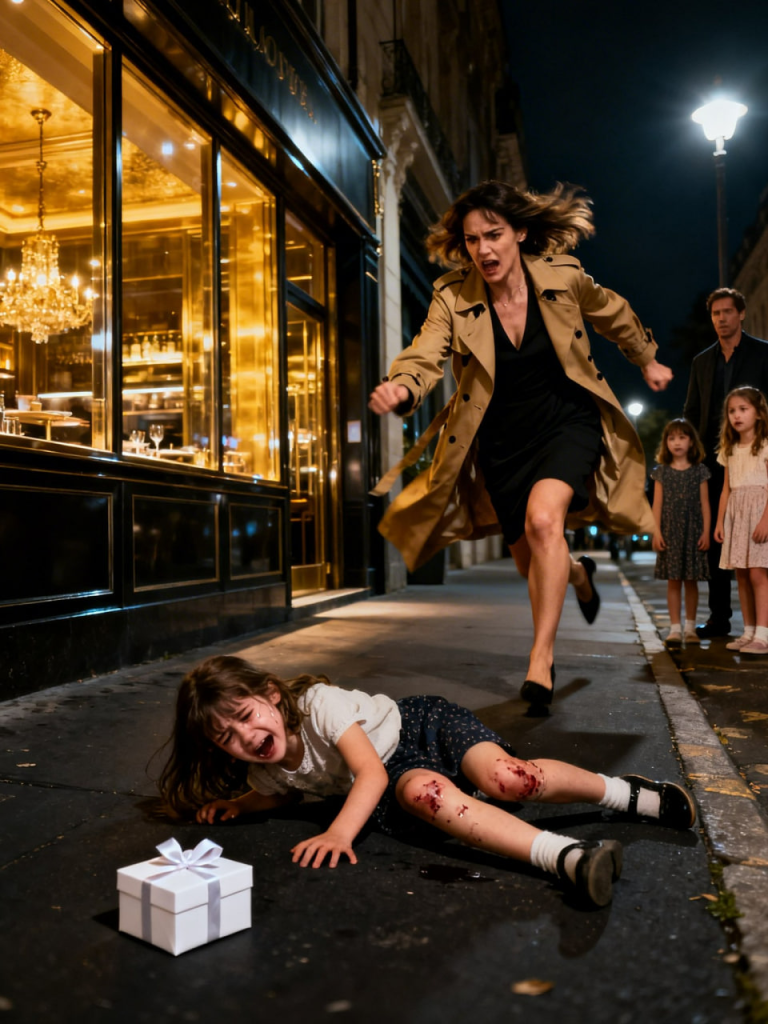
My father left before I was even fully here.
That’s how my mother told it, anyway—like I’d arrived halfway finished, like I was the reason he didn’t bother to stay until the end. I’ve seen the only photo that exists of us in the hospital: a blurry, disposable-camera shot where my mother’s face is pale with exhaustion and anger, and I’m a wrinkled bundle in her arms. There’s an empty chair beside the bed. That chair became a character in our house—quiet, constant, accusing.
I grew up with the story the way other kids grow up with bedtime routines. He left because of you. She didn’t always say it in those exact words, but she didn’t need to. It was in the way she slammed cabinets when I asked a question. It was in the way she sighed, long and sharp, when I laughed too loudly. It was in the way she called me “ungrateful” when I tried to cry without making noise.
“It’s your fault he left,” she used to say, her voice sharp and exhausted, as if she’d repeated the sentence so many times it had become fact.
I grew up believing it.
I learned early that love was conditional, that affection could be withdrawn without warning, that silence was safer than asking for comfort.
In our small rental house in Ohio—two bedrooms, brown carpet worn thin in the hallway, one bathroom that never stayed warm in winter—silence was currency. If I was quiet enough, if I moved softly enough, if I made myself small enough, maybe the anger would drift past me like bad weather.
It didn’t.
My mother, Diane, worked nights when she could get them—warehouse shifts, waitressing, a few months at a call center before she got fired for “attitude.” She came home with her feet swollen and her patience gone. Some nights she’d stomp through the front door and throw her keys into the bowl by the wall like she was trying to break it. On those nights, I’d already be awake in bed, staring at the ceiling, listening for the shape of her breathing. Fast and clipped meant stay hidden. Slow and heavy meant she’d cry in the kitchen for a while, and sometimes she’d forget I existed long enough for me to feel safe.
But safety in that house was never real. It was just the absence of noise.
When she hit me, it was never dramatic like in movies. There were no big speeches, no slow-motion heartbreak. It was fast. A slap because I spilled milk. A shove because I left a toy on the floor. A fist to my shoulder because I asked if we could get McDonald’s like the kids on TV. The reasons changed. The outcome didn’t.
The worst part wasn’t even the pain. It was the look she got right before—like her face emptied out and whatever was left inside her needed somewhere to go.
Afterward, she’d say things that made it stick.
“You think this is hard?” she’d hiss. “You have no idea what hard is. I had you. I’m the one who’s stuck.”
Stuck. Like I was gum on the bottom of her shoe.
At school, I learned to keep my sleeves down even when it was warm. I learned to laugh at jokes I didn’t understand because laughter was a kind of camouflage. I learned to say “I’m fine” with my mouth while my body felt like it was holding a secret too big for my ribs.
Teachers noticed sometimes. They asked questions with careful voices. I lied with a practiced smile.
I didn’t know any other way to survive.
Then she met Gerald.
I didn’t know his name at first. I just knew the sound of my mother’s laughter one night when she came home early. It didn’t fit in our house. It bounced off the walls like something stolen.
I was sitting at the kitchen table doing homework, pencil clutched tight, when she walked in carrying a plastic bag from the gas station—soda, chips, cheap lipstick. Her hair was brushed in a way I’d never seen before, and she smelled like a perfume sample.
“Who are you dressing up for?” I asked before I could stop myself.
Her eyes narrowed, and for a second I thought I’d made a mistake that would cost me.
But then she smiled. Not at me—through me.
“None of your business,” she said. “Go to bed.”
I wasn’t tired, but I did it anyway. I lay in my room and listened to her talk on the phone. Her voice got soft, syrupy. She called someone “baby.” She giggled.
In the morning, she was humming while she made coffee. Humming. Like we were the kind of family where humming happened.
For a few weeks, she was almost… lighter. Not kind, exactly, but distracted. She forgot to yell about dishes. She didn’t notice if my shoes were muddy. She’d stare at her phone with a hungry little smile, like it was feeding her something she’d been starving for.
Then she told me, as if announcing a weather report.
“I’m seeing someone,” she said, putting mascara on in the bathroom mirror.
I stood in the hallway holding my backpack straps. “Okay.”
“He has a kid,” she added.
I didn’t know what to do with that information, so I just nodded.
“She’s your age,” my mother said, and I saw something like calculation flicker across her face. “So you two should get along.”
The word should landed like a warning.
“What’s his name?” I asked.
She blinked, as if surprised I’d spoken. “Gerald.”
I repeated it silently to myself. Gerald. It sounded like an old man name, like something you’d hear in a retirement home. It didn’t match the way my mother had been acting—like she’d found fireworks.
“You’ll meet them,” she said, snapping her mascara tube closed. “We’re going out to dinner.”
Dinner. Out.
We never went out. Not unless it was a birthday and even then, it was usually pizza in the living room with the TV too loud.
That day, she made me shower twice. She scrubbed my nails with a toothbrush until my fingertips stung.
“You better not embarrass me,” she warned, tugging a brush through my hair hard enough to make my scalp burn. “If you act weird, I swear to God…”
“I won’t,” I whispered.
In the car, she kept glancing at herself in the rearview mirror. She wore a dress I’d never seen, one that hugged her like it belonged to a different version of her—a version that didn’t have a kid she hated.
We pulled into the parking lot of a chain restaurant with fake plants by the entrance and bright lights that made everything look too clean. The kind of place where families celebrated little-league wins and people drank margaritas that came in fishbowl glasses.
I remember the sign, glowing in the early evening like a promise. I remember the smell—fried food and sugary cocktails and lemon cleaner.
Gerald was already inside.
He stood when we walked in, like he’d rehearsed it. He was tall, broad-shouldered, with neat hair and a collared shirt. His smile was practiced, the kind men use when they want to appear reliable. He kissed my mother on the cheek like she was something precious.
Then his gaze slid to me.
It wasn’t hateful. That would’ve been easier to understand. It was… assessing. Like he was looking at a stain on a nice shirt and deciding if it was worth scrubbing.
“This must be…” he started.
“Kayla,” my mother said, and she said my name the way people say a chore. “My daughter.”
I tried to smile. It felt like pulling stiff fabric over my teeth.
A girl stood up beside Gerald, swinging her legs against the booth. She had shiny brown hair in a ponytail and a face that looked open, confident. She wore a bright hoodie with a cheerleading logo and sneakers that didn’t have holes.
“This is Brianna,” Gerald said, his voice warming. “My daughter.”
Brianna looked me over with quick eyes and then smiled. “Hi.”
“Hi,” I said.
We slid into the booth. My mother sat close to Gerald, knees angled toward him. I sat across from them, next to Brianna, who immediately started talking about school and soccer and how her dad let her get a soda even on weeknights.
Gerald laughed at everything she said.
My mother laughed too—too loudly, like she was trying to prove she belonged in their world.
I mostly stayed quiet, hands in my lap, listening. I watched Gerald watch my mother. I watched my mother watch Gerald. It felt like a performance, and I was the extra they hadn’t wanted to cast.
When the waitress came, Gerald ordered with confidence. He knew what he liked. He asked for extra sauce. He made a joke about being “a creature of habit.” The waitress laughed. My mother smiled like she’d won something.
“What about you?” Brianna asked me, pointing at the menu. “Do you like chicken tenders? They’re really good here.”
“I don’t know,” I said. “I’m fine.”
My mother’s eyes flicked to me, sharp. Don’t be difficult. Even my quietness could be wrong if it wasn’t the right kind of quiet.
“I’ll have the burger,” I said quickly, picking the first thing I saw.
Gerald nodded as if approving my choice. Then he turned back to my mother.
“You look great,” he said to her.
My mother’s cheeks colored. “Stop.”
He didn’t. He kept looking at her like she was a prize he’d earned.
For a moment—just a moment—I wondered what it would feel like to be looked at like that. To be wanted.
The food came. Plates clattered. Brianna talked. Gerald listened.
I tried to eat without making noise. I chewed slowly. I wiped my mouth carefully. I kept my eyes down so no one would notice the bruise on my cheekbone from two days ago, fading from purple to yellow.
But Gerald noticed anyway.
His gaze snagged on my face. Just for a second. His smile didn’t change, but something in his eyes tightened, like a window closing.
He leaned closer to my mother, voice low.
I couldn’t hear at first over the restaurant noise—the laughter, the music, the clink of silverware. Then Brianna got up to go to the bathroom, and the booth felt suddenly quieter.
Gerald spoke again, and this time I heard him clearly.
“I don’t want to see her next time.”
The words landed like a plate dropped on tile. I froze with my fork halfway to my mouth.
My mother didn’t even blink.
She smiled, soft and immediate.
“You won’t see her again,” she promised.
It was so casual. Like they were discussing appetizers.
My throat closed. My heart beat hard, loud in my ears. I waited for someone to say something else, to laugh, to correct it—Oh, we didn’t mean it like that. But no one did.
Gerald nodded once, satisfied.
My mother reached for his hand under the table like she’d been rewarded.
I sat there with my burger growing cold, staring at the ketchup smear on my plate. I wanted to disappear so badly I could feel my body trying to obey.
When Brianna came back, she slid into the booth and started talking again, oblivious. She asked if I wanted to try one of her fries.
I shook my head, unable to speak.
My mother kept laughing with Gerald, her eyes bright, her voice sugary.
And I understood something I’d never let myself say out loud before:
My mother didn’t just fail to love me.
She wanted me gone.
After dinner, Gerald walked us to the car. He hugged my mother, long and possessive. Brianna waved at me.
“Maybe we can hang out sometime,” she said, like it was normal to make plans with someone you’d just met.
I nodded because nodding was safer than truth.
My mother drove home with one hand on the wheel, the other tapping her phone. She looked satisfied, like the night had fed her.
In the passenger seat, I stared out the window at the darkening sky and tried to figure out what You won’t see her again meant in practical terms.
Would she drop me off somewhere?
Would she send me away?
Would she leave me at school and just not come back?
I’d seen kids get “sent to live with relatives,” whispered about in the halls. I’d heard teachers say “family situation” with careful voices. I’d watched CPS workers talk to students behind closed doors.
Those things happened to other kids.
But tonight, the possibility sat in my lap like a ticking device.
At home, my mother kicked off her shoes and went straight to her bedroom, locking the door behind her. I heard her laugh on the phone, heard the soft coo of her voice.
I went to my room and lay on my bed fully clothed, staring at the ceiling.
I tried to make myself numb.
Instead, my mind replayed the moment at the booth over and over, like it was trying to punish me into understanding.
I don’t want to see her next time.
You won’t see her again.
If my life had been a room, those words were a new door opening—and behind it was nothing.
The next morning, my mother acted like everything was normal.
She yelled at me for taking too long in the bathroom.
She complained about her coffee being weak.
She told me to hurry up or I’d miss the bus.
But I watched her hands. They moved with purpose. She kept glancing at her phone. She seemed… busy.
When I got home from school, she was on the couch with a notepad, writing something down.
“Go to your room,” she snapped when she saw me.
I did. I sat on my bed and listened through the thin walls.
I heard her say Gerald’s name.
I heard her laugh.
Then her voice dropped low, serious.
“I can’t keep doing this,” she said. “I need a clean start.”
There was a pause. Then she said, like she was reading from a script she liked the sound of:
“Yeah. I told you. You won’t have to see her.”
My stomach turned.
That night, she didn’t hit me. That was almost worse. She ignored me completely, like she’d already started practicing my absence.
I made myself dinner—microwaved macaroni and cheese—and ate it standing at the counter. I washed the bowl and put it away quietly. I packed my backpack for school and tucked it by my bed.
Then I sat in the dark and waited.
For what, exactly, I didn’t know. For the moment she’d follow through. For the sound of my name being erased.
In the days that followed, my mother’s cruelty changed shape.
Before Gerald, she hurt me because she was angry.
After Gerald, she hurt me because she was busy.
She grabbed my wrist and yanked me out of her way when she walked through the hallway.
She hissed at me to “stop existing so loud” when I coughed.
She stopped buying things I needed—shampoo, socks, lunch meat—and told me to “figure it out.”
One morning, she tossed a trash bag onto my bed.
“Clean your room,” she said. “You’re not taking any of this crap with you.”
I stared at the bag. “With me where?”
Her eyes snapped to mine, cold. “Don’t start.”
I swallowed. “I’m not starting. I just—”
She stepped closer, voice low and dangerous. “You always have to ruin everything. You always have to be a problem.”
“I’m trying not to,” I whispered.
She laughed once, sharp. “You’re breathing. That’s enough.”
Then she walked away.
I stood there shaking, the trash bag crinkling under my fingers like a warning.
At school, I started watching other kids differently.
I watched the way their parents waited in car lines, waving.
I watched the way kids complained about chores and curfews, confident their home would still be there.
I watched the way teachers smiled when students talked about family vacations.
I felt like I was living behind glass.
I didn’t tell anyone what Gerald had said. I didn’t tell anyone what my mother had promised.
Because the truth felt unbelievable even to me.
And because part of me still believed I deserved it.
One Thursday afternoon, in the last period before dismissal, my homeroom teacher, Mrs. Cartwright, asked me to stay after class.
She was the kind of teacher who wore sweaters with cats on them and decorated her desk with tiny motivational signs. She smiled a lot. She called everyone “honey.” I’d always assumed her kindness was just part of the job, like grading papers.
When the room emptied, she sat on the edge of her desk and looked at me carefully.
“Kayla,” she said gently, “can I ask you something?”
My hands clenched around my backpack strap. “Okay.”
She hesitated. “Are you safe at home?”
My heartbeat stumbled.
“I’m fine,” I said automatically.
Her gaze didn’t move. “You’ve been quieter lately. And I noticed…” She paused, choosing her words like they were fragile. “I noticed bruises.”
I glanced down. My sleeve had ridden up without me noticing, revealing the faded marks on my forearm where my mother had grabbed me.
I tugged my sleeve down fast. “It’s nothing.”
Mrs. Cartwright’s face softened in a way that made my throat ache.
“You don’t have to protect anyone here,” she said. “You don’t have to protect her.”
The word her made my stomach lurch.
I stared at the floor. Silence had kept me alive for years. But now silence felt like a rope tightening.
I thought of Gerald’s voice.
I don’t want to see her next time.
I thought of my mother’s promise.
You won’t see her again.
My eyes burned.
Mrs. Cartwright didn’t push. She just waited, patient and still, like she understood that forcing a door open can break the hinges.
Finally, the words slipped out of me like something I’d been holding underwater too long.
“She said I won’t be there next time,” I whispered.
Mrs. Cartwright blinked. “Next time where?”
“At dinner,” I said, my voice trembling. “With him.”
“With Gerald?” Her brow furrowed.
I nodded.
Mrs. Cartwright’s expression changed—not into shock, exactly, but into something firm. Something protective.
“Tell me what happened,” she said.
So I did.
I told her about the restaurant. About Brianna offering me fries. About Gerald’s eyes on my bruises. About his voice, calm and certain.
“I don’t want to see her next time.”
And my mother’s answer, immediate and eager.
“You won’t see her again.”
When I finished, my chest felt hollow, like I’d given away a piece of myself I’d been guarding.
Mrs. Cartwright exhaled slowly.
“Kayla,” she said, “I’m really glad you told me.”
I didn’t feel glad. I felt terrified.
“What happens now?” I asked.
She reached for the phone on her desk.
“Now,” she said gently, “we get you help.”
The next few hours blurred like a movie I couldn’t pause.
A counselor came. Then the principal. Then a woman with a badge clipped to her belt and a calm face that didn’t flinch when I spoke.
She introduced herself as Ms. Alvarez from Child Protective Services.
She asked me questions in a quiet office while Mrs. Cartwright sat nearby.
“Has your mother ever hit you?” Ms. Alvarez asked.
My mouth went dry.
I hesitated, and Ms. Alvarez’s tone stayed steady. “It’s okay, Kayla. You’re not in trouble.”
I looked at Mrs. Cartwright. Her eyes were kind. Not pitying. Not judging.
I nodded. “Yes.”
“How often?”
I swallowed. “A lot.”
“Does she leave marks?”
I rolled up my sleeve with shaking fingers.
Ms. Alvarez didn’t gasp. She didn’t make a face. She just wrote things down carefully, like my pain deserved documentation.
“Has she ever threatened to abandon you?” Ms. Alvarez asked.
I thought of the trash bag. The way my mother said, You’re not taking any of this with you.
“Yes,” I whispered.
Ms. Alvarez nodded slowly. “Okay.”
I asked the question that had been gnawing at me since the restaurant.
“Are they allowed to just… get rid of me?” I said, my voice cracking. “Like—like I’m nothing?”
Ms. Alvarez’s eyes softened. “No,” she said firmly. “They’re not.”
For the first time in my life, someone said no to my mother without my mother being in the room.
It felt unreal.
Ms. Alvarez told me she needed to go to my house. She told me she’d talk to my mother. She told me I could go home today, but she didn’t recommend it.
“Do you have anyone you trust?” she asked.
I stared at her. Trust was a concept I’d heard about, like gravity, something that existed but didn’t apply to me.
“No,” I said, the word small and heavy.
Ms. Alvarez nodded again, as if she’d expected that.
“Okay,” she said. “Then we’ll figure it out.”
That evening, I didn’t go home.
Ms. Alvarez drove me to a temporary placement—a small, clean house with a woman named Mrs. Jennings who smiled too much and spoke too softly. She made me a grilled cheese sandwich and asked if I wanted tomato soup.
I didn’t know how to answer such gentle questions. I kept waiting for the trap.
I slept in a guest room with a quilt that smelled like laundry detergent and something floral. I lay awake for hours listening to the unfamiliar quiet.
No doors slamming. No footsteps pacing. No angry muttering.
Just… calm.
It should’ve felt safe.
Instead, it felt like standing on thin ice.
The next day, Ms. Alvarez came back.
“She’s angry,” Ms. Alvarez said simply.
My stomach clenched. “My mom?”
Ms. Alvarez nodded. “She denies everything.”
Of course she did.
“She says you’re a liar,” Ms. Alvarez added.
The words stung even though I’d expected them.
Ms. Alvarez continued, “She also says she’s been under stress. That you’re ‘dramatic.’”
I looked down at my hands. “Gerald said—”
“I know,” Ms. Alvarez said. “We’re looking into it.”
I couldn’t stop myself. “Did you talk to him?”
Ms. Alvarez’s face stayed neutral, but I saw a flicker of something like frustration.
“He wasn’t at the house when I went,” she said. “Your mother said he’s busy. She said you’re jealous.”
Jealous.
Like I wanted this life.
Ms. Alvarez leaned forward. “Kayla, listen to me. None of this is your fault.”
I wanted to believe her.
But the story I’d lived with for years—the empty chair in the hospital photo, my mother’s voice repeating the same sentence like it was scripture—fought back hard.
It’s your fault he left.
It’s your fault she’s angry.
It’s your fault you’re unwanted.
I didn’t say any of that out loud. I just nodded, because nodding was what I did when I didn’t know what else to do.
A week passed. Then two.
CPS scheduled interviews. They checked records. They talked to teachers.
My mother called twice.
The first time, Mrs. Jennings answered and handed me the phone with a sympathetic look.
I held it like it might bite me.
“What?” I said.
My mother’s voice came through sharp as glass.
“You think you’re real smart?” she snapped. “You think you’re gonna ruin my life?”
My throat tightened. “I didn’t—”
“Shut up,” she hissed. “You always do this. You always make everything about you.”
My fingers gripped the phone tighter.
She continued, furious. “Gerald doesn’t want drama. He doesn’t want baggage. You hear me?”
Baggage.
The same word, different mouth.
“Come home,” she said suddenly, her tone shifting. “We can fix this. Just tell them you lied.”
My heart hammered.
“Please,” she added, but it didn’t sound like pleading. It sounded like a threat wrapped in a softer word.
I swallowed. “I can’t.”
There was a pause. Then she laughed, low and ugly.
“Fine,” she said. “Stay there. See if anyone keeps you. Nobody wants someone like you.”
The line went dead.
I sat there holding the silent phone, my body shaking like it remembered every hit.
Mrs. Jennings didn’t ask questions. She just sat beside me and placed a hand near my shoulder—not touching, just offering.
I didn’t cry until later, when I was alone in the guest room and the darkness felt like it had teeth.
The second call came three days after that.
This time, my mother didn’t yell right away.
Her voice sounded smooth, almost sweet. “Kayla,” she said, like we were friends. “I’ve been thinking.”
I didn’t answer.
“I shouldn’t have been so hard on you,” she said. “I’m sorry.”
The word sorry sat between us like a prop. It didn’t belong.
“I talked to Gerald,” she continued. “He thinks you should come back. We can be a family.”
Family.
I almost laughed.
Then she said, in the same casual tone she’d used at the restaurant, “You can just… start over. But you have to promise you won’t do this again.”
I stared at the wall.
“You have to promise you won’t embarrass me again,” she clarified, irritation slipping through. “You can’t keep acting like some victim.”
My hand shook so hard I nearly dropped the phone.
“I am a victim,” I whispered before I could stop myself.
Silence.
Then her voice snapped back, sharp. “No. You’re a burden.”
I closed my eyes.
She exhaled like she was done pretending. “Look. If you don’t come home, I’m not fighting for you. You understand? You’re making your choice.”
My chest hurt.
It wasn’t a choice. It was survival.
“I’m not coming back,” I said, my voice shaking but steady.
Her tone went cold. “Then you won’t see Gerald again. You won’t see anyone.”
It was the same promise, flipped.
“You won’t see her again.”
Only now I understood what it really meant: I will erase you if it serves me.
The call ended.
I sat very still, and for a moment, something inside me stopped begging.
A month later, Ms. Alvarez told me my mother had “made a plan” to send me away.
“What kind of plan?” I asked, dread crawling up my spine.
Ms. Alvarez’s eyes sharpened. “She bought a bus ticket,” she said. “A one-way ticket.”
My blood ran cold. “To where?”
Ms. Alvarez shook her head slightly. “She wouldn’t say. She told us you were going to ‘stay with friends.’ But she couldn’t provide names. She couldn’t provide an address.”
I stared at Ms. Alvarez, the room tilting.
“She was going to leave me somewhere,” I whispered.
Ms. Alvarez’s jaw tightened. “We believe that was her intention.”
I thought of the bus station downtown, the way people slept on benches in winter. I thought of missing-person posters I’d seen taped to lampposts. I thought of how easy it would’ve been for my mother to hand me a ticket and drive away.
And how no one would’ve looked twice.
Because kids like me were everywhere. Quiet kids. Bruised kids. Kids who didn’t make trouble until they did.
Ms. Alvarez sat back. “Kayla, we’re petitioning the court for protective custody,” she said. “You’re not going back.”
A sound escaped me that wasn’t quite a sob and wasn’t quite relief.
“Okay,” I managed.
Ms. Alvarez’s gaze softened. “You did the right thing by telling your teacher.”
I didn’t feel brave. I felt like someone who’d barely made it out of a burning house.
The court process was slow and confusing. There were meetings I didn’t understand, paperwork with words too big, adults talking around me like I wasn’t in the room.
My mother showed up to one hearing wearing a blazer and lipstick like she was auditioning to be believed. Gerald sat beside her, one hand resting on her knee.
I hadn’t seen him since the restaurant.
He looked at me once, briefly, and then looked away.
Brianna wasn’t there.
The judge asked questions. Lawyers spoke. My mother cried at the right moments, wiping tears carefully so her makeup didn’t smear. Gerald put his arm around her shoulders and nodded sympathetically, like they were the injured party.
When it was my turn to speak, my voice trembled.
I told the truth anyway.
I told them about the hitting, the grabbing, the threats.
I told them about the restaurant.
Gerald’s eyes narrowed slightly at that, just for a second.
The judge asked, “Did Mr. Whitaker say, ‘I don’t want to see her next time’?”
I swallowed hard. “Yes.”
My mother’s lawyer objected. Gerald’s lawyer shook his head.
But the judge’s gaze stayed on me, steady and serious.
“And did your mother respond, ‘You won’t see her again’?” the judge asked.
“Yes,” I said, my voice barely above a whisper.
My mother’s face twisted, anger flashing through the performance. For a split second, the Diane I knew—the one who hit, who blamed, who burned—showed through.
Then she caught herself and smiled sadly, shaking her head like I was mistaken.
“She’s confused,” my mother said, voice trembling in an actress’s way. “She’s… she’s always been emotional.”
Emotional.
Like bruises were feelings.
Like abandonment was drama.
The judge didn’t rule that day. The judge scheduled another hearing. More time. More waiting.
In that waiting, something unexpected happened: I started to live.
Mrs. Jennings’ home was temporary. After three months, I was moved to a foster placement with a couple named Mark and Elaine Harris.
They lived in a modest house with blue shutters and a porch swing. They had a golden retriever named Gus who followed me like I was the center of his world.
Elaine asked me what foods I liked. When I said “I don’t know,” she didn’t get mad. She just said, “Okay, we’ll figure it out.”
Mark showed me where the extra blankets were and said, “You don’t have to ask permission to be comfortable here.”
Those words hit me harder than any slap.
You don’t have to ask permission.
To be comfortable.
To exist.
The first time Elaine knocked on my bedroom door before entering, I didn’t know what to do. I sat on the edge of the bed, heart racing, waiting for the moment she’d ignore the knock and come in anyway.
She didn’t.
She waited until I said “Yeah?”
Then she opened the door slowly. “I made spaghetti,” she said. “Do you want to eat now or later?”
My throat tightened. The question was so normal it felt impossible.
“Now,” I said cautiously.
Elaine smiled. “Okay, honey.”
Honey.
No one had called me honey without it being sarcastic.
At dinner, they asked about my day. Not like an interrogation. Like they actually wanted to know.
I answered with short sentences, waiting for the trap. Waiting for the moment my words would be used against me.
It didn’t happen.
Over time, my body stopped flinching at every sound.
Not completely. Some nights, I still woke up sweating, hearing my mother’s voice in my head. Some mornings, I still felt guilty for being fed.
But the Harris house had small, consistent rules that didn’t change based on someone’s mood. Dinner at six. Homework after. Laundry on Sundays. If you spilled milk, you cleaned it up, and no one hit you.
I didn’t know life could be like that.
In December, Elaine asked if I wanted to help decorate the Christmas tree.
“I don’t know how,” I said honestly.
Elaine laughed softly. “There’s no wrong way.”
I stared at the ornaments in the box—tiny snowmen, a glittery star, a ceramic angel with chipped wings.
“No wrong way,” I repeated quietly.
Mark overheard and said, “That’s the rule around here.”
Elaine hung lights while I held the cord. Gus lay on the floor wagging his tail like he was proud of all of us. For a moment, the room felt warm in a way I couldn’t explain.
I realized then that my mother’s house had never been a home.
It had been a place where I survived.
This was different.
It scared me, how much I wanted it.
The next court hearing happened in early spring.
Ms. Alvarez told me Gerald had ended things with my mother.
“Really?” I asked, surprised.
Ms. Alvarez nodded. “We can’t say exactly why. But he’s no longer involved.”
I pictured Gerald’s approving nod at the restaurant after my mother promised to erase me.
Maybe he’d gotten what he wanted and moved on.
Or maybe he didn’t like the attention CPS brought.
Either way, the result was the same: my mother had lost her prize, and she was angrier than ever.
She showed up to the hearing alone this time. Her hair was perfect, but her eyes looked wild, like she hadn’t slept.
When she saw me sitting with Elaine and Mark, something flickered across her face—shock, then disgust, then fury.
Like I’d stolen something that belonged to her.
The judge reviewed the evidence. The teacher’s report. The counselor’s notes. The documented bruises. The inconsistencies in my mother’s story. The bus ticket she couldn’t explain.
My mother’s lawyer argued. My mother cried again, harder this time, louder, like volume could substitute for truth.
Then my mother looked at me directly, her voice suddenly sharp, uncontrolled.
“She’s doing this to punish me,” she snapped. “She’s always been manipulative.”
Elaine’s hand tightened around mine.
The judge’s voice turned firm. “Ms. Reynolds, you will speak respectfully in this courtroom.”
My mother laughed bitterly. “Respectfully? Where was her respect when she ruined my life?”
I flinched out of habit.
But then Mark leaned forward slightly, just enough for me to feel his presence beside me. Steady. Unmoved.
The judge stared at my mother for a long moment.
Then the judge spoke the words that changed my life.
“Based on the evidence presented,” the judge said, “I am granting permanent guardianship to the foster family and terminating reunification efforts.”
The courtroom went silent.
My mother blinked like she hadn’t understood the language.
Then her face contorted.
“No,” she said, loud. “No, no, no—”
The judge raised a hand. “This decision is final.”
My mother turned toward me, eyes blazing, and for a second I thought she would lunge across the room.
“This is your fault,” she hissed, the old sentence sharpened into a weapon one last time. “It’s always been your fault.”
Something inside me—something small and long-suppressed—stood up.
Maybe it was anger. Maybe it was clarity. Maybe it was the quiet strength of a girl who had finally been believed.
I looked at her, really looked at her, and I said, softly but clearly:
“No.”
She stared at me, stunned, like the word didn’t compute.
I continued, my voice shaking but real. “You did what you did. You chose it. Not me.”
My mother’s mouth opened, searching for a response that would make the world obey her again.
But the judge was already calling the next case.
The world moved on.
And for the first time, so did I.
After the hearing, in the parking lot, I stood beside Elaine’s car and breathed in the cold spring air like it was the first breath I’d ever taken on purpose.
Ms. Alvarez approached with a small smile. “How are you feeling?”
I stared at the clouds, at the gray sky stretching wide above us.
“I don’t know,” I admitted.
Ms. Alvarez nodded. “That’s okay.”
Elaine wrapped a scarf around my neck. “We’ll get ice cream,” she said gently. “If you want.”
I looked at her. “Even if it’s not a special day?”
Elaine’s eyes softened. “Especially because it is.”
I didn’t cry until later, in the backseat of the car, while Mark drove and Gus panted happily beside me.
The tears came hard, silent at first, then shaking. Elaine reached back and held my hand.
I cried for the kid I’d been who thought bruises were normal.
I cried for the empty chair in the hospital photo.
I cried for the girl at the restaurant who swallowed her fear with cold fries and ketchup, trying to disappear.
And I cried because I was still here.
Years passed.
Healing wasn’t a straight line. Sometimes I’d be fine for weeks and then a smell—cheap perfume, burnt coffee—would drag me back. Sometimes someone would raise their voice in a grocery store and my heart would race like I was twelve again.
But slowly, the story I’d been given stopped being the only one.
I graduated high school. Elaine cried louder than anyone when my name was called. Mark clapped like it was a championship game.
I went to community college. I studied social work because I couldn’t stand the idea of kids like me being invisible.
I learned words for things I’d lived through: trauma, neglect, conditioned fear.
I learned that children don’t “cause” adults to abandon them. Adults make choices.
I learned that love isn’t supposed to feel like you’re constantly auditioning.
One afternoon, during my second year of college, I drove past the same chain restaurant where Gerald had said he didn’t want to see me.
The sign still glowed. Families still went in and out laughing, carrying takeout bags and leftovers.
I parked across the street and sat in my car, hands on the steering wheel, staring at the entrance like it was a doorway to another life.
Part of me wanted to go inside, to sit in that same kind of booth and prove I could exist in that space without being erased.
Another part of me didn’t need to.
Because the truth wasn’t in the building.
The truth was in the girl who survived it.
I didn’t go in.
I started the car and drove home—to the house with blue shutters, to the porch swing, to Gus barking like I’d been gone for years instead of hours.
Elaine was in the kitchen chopping onions when I walked in. Mark was at the table reading the paper.
“Hey, kiddo,” Mark said, looking up with a smile that didn’t require me to earn it.
“Hey,” I said.
Elaine turned, eyes bright. “Dinner in twenty. You hungry?”
I paused.
In my mother’s house, hunger was something you apologized for.
Here, hunger was just a fact. Like weather. Like breathing.
“Yeah,” I said, and my voice didn’t shake. “I’m hungry.”
Elaine smiled. “Good.”
I hung my jacket on the hook by the door and realized, suddenly, that I hadn’t thought about my mother all day until that moment at the restaurant.
Her voice—the one that had once lived in my head like a permanent echo—was quieter now.
Not gone.
But quieter.
And in the silence it left behind, something else grew.
A new truth.
The one no one told me when I was small.
The one I had to learn the hard way.
I wasn’t deadweight.
I wasn’t baggage.
I wasn’t a mistake that drove people away.
I was a kid who needed love and didn’t get it—until I did.
And I was still here.
Still breathing.
Still taking up space.
Not because anyone finally decided I deserved it—but because I always did.
THE END



Leave a Reply